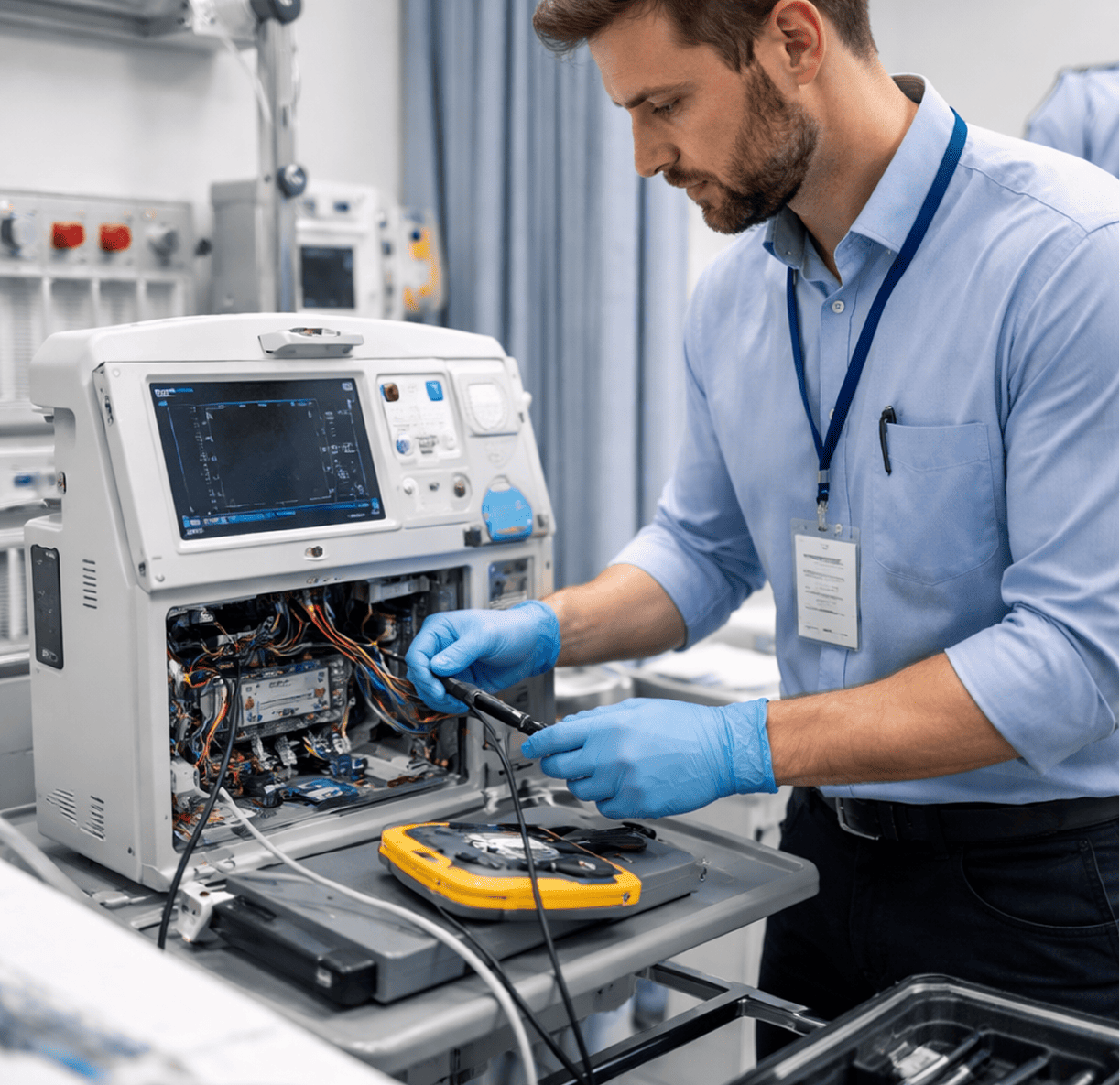
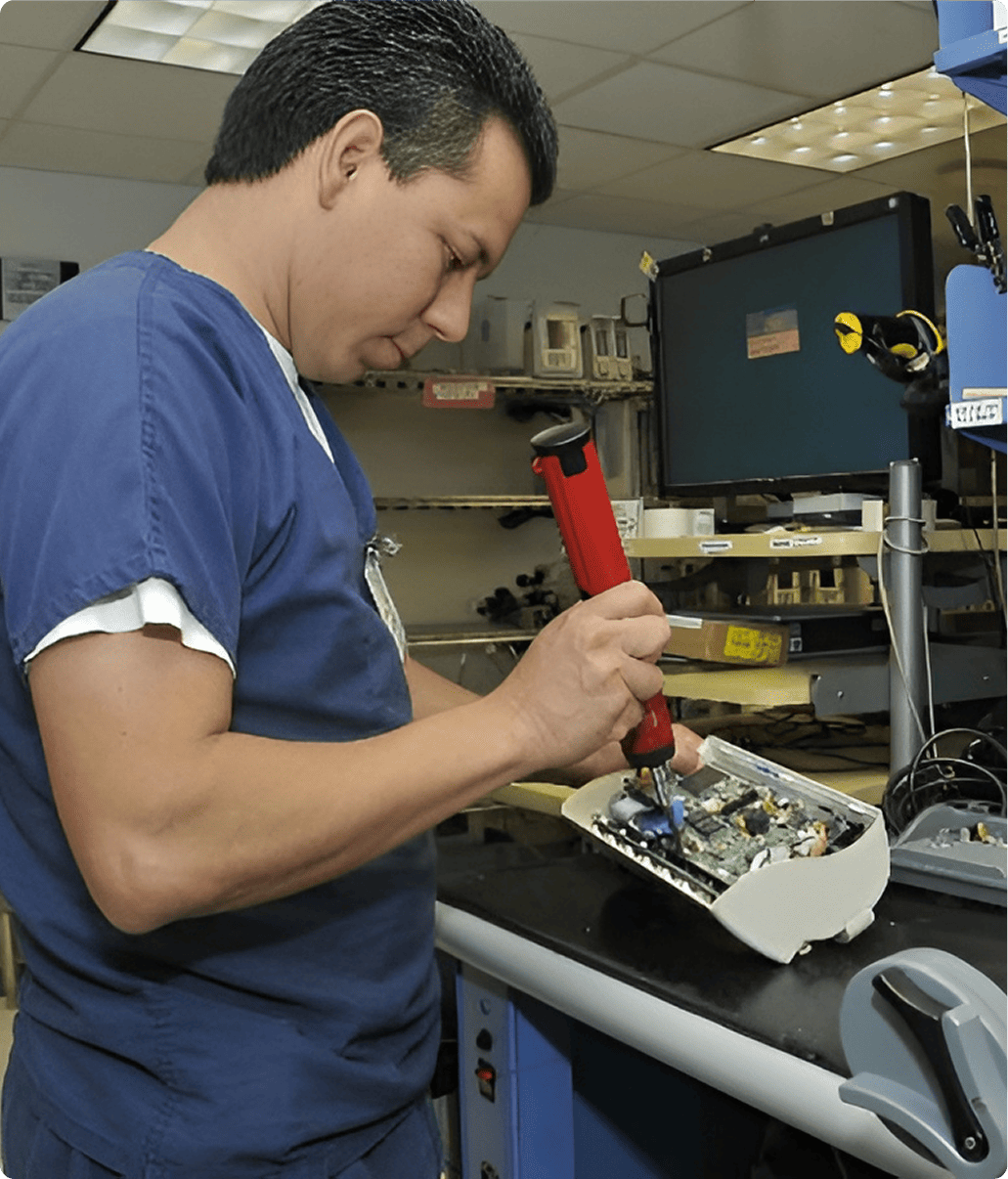
Repair and Troubleshooting Services We Provide

  • Repair evaluation and troubleshooting support for medical equipment
  • Performance verification after repair or corrective service
  • Functional confirmation to support documentation and 
compliance needs
  • Ongoing support for equipment that requires regular service attention
  • Imaging equipment repair and troubleshooting – CT, X-ray, fluoroscopy, C-arm, ultrasound, and related systems
  • Documentation of repair findings, actions taken, and follow-up recommendations after every service visit
  • Coordination with facility staff to minimize disruption to operations during repair visits
  • Honest scope assessment – MBT will communicate clearly if a repair falls outside its capabilities before attempting service

Repair and troubleshooting requests are reviewed before scheduling to confirm the equipment and reported issue fall within MBT’s approved service scope. Facilities receive a clear response about what MBT can address and what may require a different service approach – so there are no surprises on the day of the visit.

Equipment Categories Supported

We support a wide range of medical equipment used across healthcare environments. Our repair and troubleshooting services are organized around core equipment categories so facilities can quickly understand the types of systems we service.

  • General biomedical and clinical-support equipment – patient monitors, infusion pumps, vital sign devices, and related patient-care equipment
  • Monitoring and diagnostic devices – diagnostic equipment used in routine clinical assessment and patient monitoring
  • Mobility and patient-handling equipment – lifts, transfer equipment, and mobility aids used in patient care settings
  • Procedure-room and specialty support equipment – equipment used in procedure rooms, treatment areas, and specialty clinical environments
  • Imaging equipment – X-ray and radiographic systems, CT systems, fluoroscopy systems, C-arm and mobile imaging units, ultrasound systems, injectors, and related imaging infrastructure. MBT’s lead engineer brings 30+ years of specialized radiology and diagnostic imaging experience to every imaging repair engagement.
  • Electrical safety testing equipment checks – identifying equipment that may require safety testing as part of the repair or corrective service process
  • Patient-connected accessories and support devices – leads, coils, cables, and related accessories for imaging and monitoring equipment

If your facility has equipment that does not appear on this list, submit a repair request with the equipment type and reported issue. MBT will assess whether it falls within the approved service scope and respond with a clear answer before scheduling a visit.

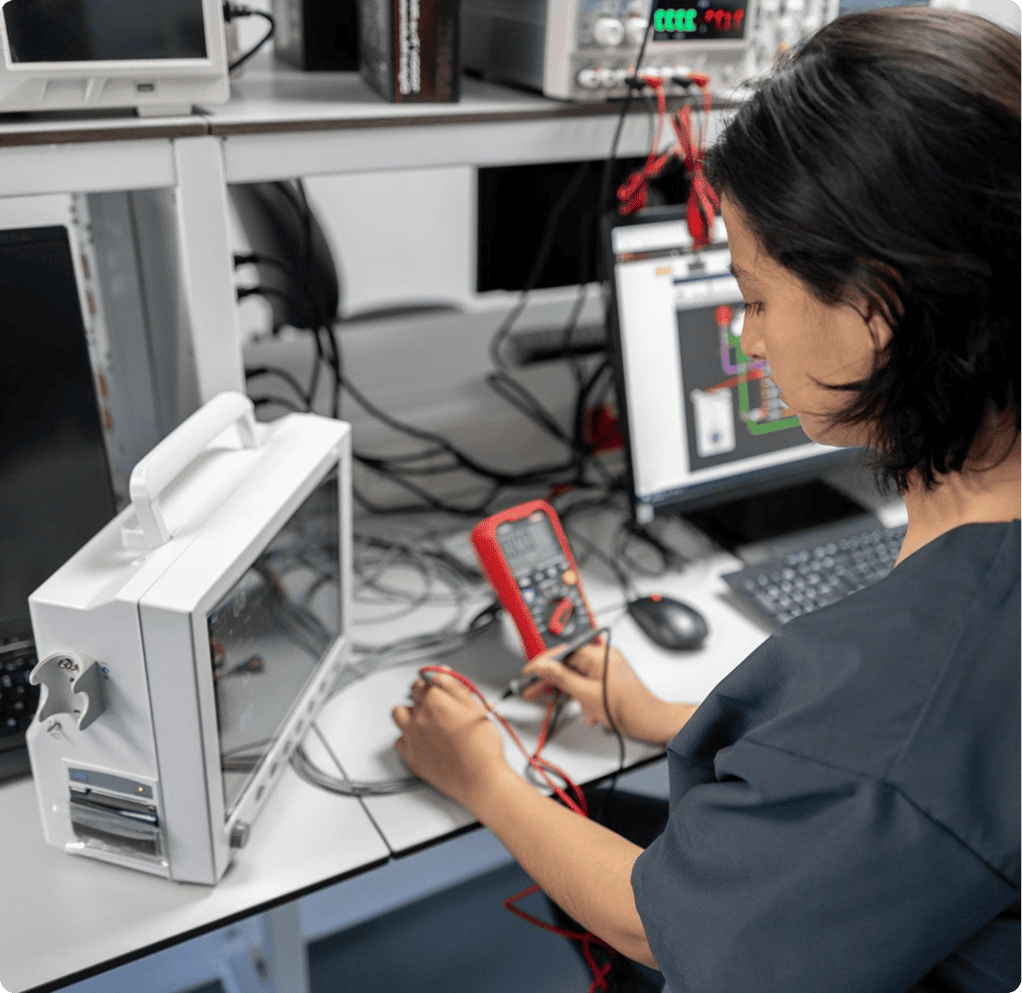
A More Focused and Reliable Repair Approach

Medical equipment repair requires a clear and structured approach. Healthcare facilities depend on service partners who can assess problems accurately, communicate clearly, and provide documented results after each service interaction.

Midwest Biomedical Technologies focuses on practical troubleshooting, organized service coordination, and consistent follow-through so facilities can manage equipment issues with greater clarity and control.

For imaging equipment specifically, repair quality depends heavily on the engineer’s familiarity with the system being serviced. A generalist who services imaging equipment occasionally is working from a manual and general troubleshooting principles. MBT’s lead engineer has spent 30+ years focused exclusively on radiology and diagnostic imaging systems – which means imaging equipment repairs are approached with genuine system knowledge, not just process compliance.

MBT also approaches repair work with an eye toward documentation. Every repair visit produces a written record of what was found, what was done, and what is recommended for follow-up. For facilities that need to demonstrate responsible equipment management during surveys or accreditation reviews, that documentation trail matters – it shows that equipment issues were identified, addressed, and tracked appropriately.

When repair needs are identified during a preventive maintenance visit, MBT can address corrective service in the same engagement where scope and timing allow, or schedule a follow-up visit promptly. Facilities that work with MBT on a recurring basis benefit from a service partner who already knows their equipment and can move quickly when something goes wrong.

Imaging Equipment Repair and Troubleshooting

Imaging equipment repair is one of the most technically demanding areas of biomedical service. CT systems, X-ray units, fluoroscopy suites, C-arm units, and ultrasound systems each involve complex electrical, mechanical, and software components that require genuine system familiarity to troubleshoot effectively. A generalist biomedical engineer working on an imaging system for the first time is at a significant disadvantage compared to someone who has spent a career on those systems.

MBT’s lead engineer has spent more than 30 years working exclusively in radiology and diagnostic imaging equipment service. That background means imaging equipment issues are diagnosed faster, repairs are approached with a clearer understanding of what is likely causing the problem, and the documentation produced after the repair reflects a technically informed assessment of what was found and what was done.

For imaging centers, hospital radiology departments, outpatient facilities, and clinics where imaging equipment downtime directly affects patient scheduling and revenue, having access to a repair resource with that level of specialization is a meaningful operational advantage. MBT is not a generalist who handles imaging as one item on a long list – imaging is the core technical expertise MBT was built around.

What Happens After a Repair Visit

Every MBT repair visit concludes with written documentation covering what was found, what corrective actions were taken, and what follow-up is recommended. This documentation is provided to the facility after every visit – not submitted to an internal system that takes days to generate a report.

If a repair reveals additional issues that could not be addressed during the current visit – whether due to scope, parts availability, or time constraints – those findings are documented clearly with a recommended next step. Facilities are not left guessing about whether their equipment has been fully resolved or what outstanding issues remain.

For facilities that work with MBT on a recurring basis, repair documentation becomes part of a broader equipment service history that reflects the equipment’s maintenance and corrective service record over time. That history is useful during surveys, during equipment lifecycle decisions, and any time a facility needs to demonstrate responsible equipment management.

Frequently Asked Questions

Do you only repair general biomedical equipment?

No. MBT supports repair and troubleshooting for a broad range of medical equipment including general biomedical devices, monitoring and diagnostic systems, mobility and patient-handling equipment, procedure-room support equipment, and imaging-related systems including CT, X-ray, fluoroscopy, C-arm, ultrasound, and related imaging infrastructure. MBT’s lead engineer has 30+ years of specialized radiology and diagnostic imaging experience, making imaging equipment repair one of MBT’s primary capabilities.

Can repair service be tied into preventive maintenance or a contract?

Yes. MBT can structure recurring service agreements that include preventive maintenance and repair support under a coordinated program. When issues are identified during a preventive maintenance visit, corrective service can be addressed in the same engagement where scope allows, or scheduled promptly as a follow-up. All repair activity is documented consistently as part of the facility’s service history.

Do you provide documentation after repair?

Yes. Every repair visit includes written documentation of what was found, what corrective actions were taken, and what follow-up is recommended. Documentation is provided to the facility after every visit and is formatted to support compliance recordkeeping and equipment service history.

Can you help if we are not sure what is wrong yet?

Yes. MBT provides troubleshooting and diagnostic support as part of repair service. If a piece of equipment is performing outside expected parameters but the specific cause is not yet identified, MBT can assess the equipment, identify the likely cause, and recommend the appropriate corrective action. Submit a repair request with as much detail as possible about the reported symptoms and MBT will follow up to discuss next steps.

How quickly can MBT respond to a repair request?

Response time depends on location, schedule availability, and the nature of the equipment issue. For urgent equipment failures, call (708) 406-9887 directly so MBT can assess the situation and prioritize accordingly. For non-urgent repair requests, submit through the website and MBT will follow up within one business day.

Does MBT repair imaging equipment specifically?

Yes. Imaging equipment repair is one of MBT’s primary capabilities. MBT’s lead engineer has spent his entire 30+ year career focused on radiology and diagnostic imaging equipment service – CT systems, X-ray, fluoroscopy, C-arm, ultrasound, and related imaging systems. Imaging equipment repairs are approached with genuine system familiarity, not general troubleshooting from a manual.

Does MBT serve facilities outside Illinois for repair services?

Yes. MBT serves facilities throughout the Midwest including Indiana, Wisconsin, Michigan, Ohio, Minnesota, Iowa, Missouri, Kansas, Nebraska, North Dakota, and South Dakota. Contact MBT to confirm availability for your specific location and equipment type.

How do I request repair or troubleshooting support?

Submit a request through the website or call (708) 406-9887 directly. Include your facility type, location, the equipment that needs service, and a description of the issue or symptoms. MBT will follow up to confirm scope and schedule the visit.