What Should You Do When Medical Equipment Breaks Down Without Warning?

When a patient monitor goes dark in the middle of rounds or an infusion pump stops with no clear reason, what do you do first? That moment can feel chaotic, especially when staff are busy and patients are waiting. This guide walks you through exactly what to do when medical equipment breaks down without warning, how to keep everyone safe, and when to bring in professional help.

At Midwest Biomedical Technologies, we work with clinics, nursing homes, imaging centers and surgery centers across Illinois and the wider Midwest every day. From facilities near Millennium Park and Navy Pier to communities near Willis Tower and the Magnificent Mile, we see the same pattern. Fast, calm action plus good documentation keeps downtime short and compliance intact.

Why Sudden Failure Happens More Often Than You Expect

Medical devices work hard. They run all day; they get moved, cleaned, bumped and shared between rooms. Even with good care, parts wear out. Breakdowns are not rare; they are part of managing a large fleet, so your response plan matters more than the failure itself.

First Five Minutes: What To Do Right Away

When equipment fails, speed and clarity help.

  1. Pause and protect the patient: If the device is connected to a patient, switch to a backup or manual method right away. Do not try to reboot while it is still in use.
  2. Note the exact failure: Write what you saw, what you heard, and what the screen showed. A photo of the error code helps later.
  3. Remove and tag: Take the unit out of service, tag it clearly as out of service, and move it to a designated repair area.
  4. Tell the right person: Notify the charge nurse, biomed contact, or supervisor so no one else tries to use it.

Remove, tag, and document before you try to fix anything.

How To Keep Patients And Staff Safe When Gear Fails

Safety comes before troubleshooting.

  1. Check for backup: Do you have a second unit, a rental, or a manual alternative that meets the same need? For vital signs, that could be a manual blood pressure cuff and pulse oximeter.
  2. Check power and connections: Look for loose plugs, dead batteries, or oxygen lines that came undone. Many apparent failures are power or connection issues.
  3. Keep the area clear: If there is any risk of electrical issue, fluid leak, or overheating, keep staff and patients away and follow your facility policy.

If you serve patients near busy Chicago corridors or in smaller Midwest towns, your team may be spread thin. A short safety huddle can prevent a second problem while you sort the first one.

How To Figure Out What Went Wrong

You do not need to be an engineer to capture useful clues for emergency medical equipment repair.

  1. When did it fail: During startup, during use, after cleaning, or after transport?
  2. What changed: New staff, new accessory, new location, recent preventive maintenance?
  3. What are the indicators: Alarms, smells, noises, error numbers, blank screen, intermittent function?

Write answers in plain language. That list will save time when you need to fix medical equipment and it will support your compliance file.

Good notes cut repair time because the tech does not have to guess what happened.

When To Call For Emergency Medical Equipment Repair

Some issues can wait for the next scheduled visit. Others need help now.

Call right away when you see any of these:

  1. Life support or monitoring equipment that has no backup available
  2. Imaging equipment like X-ray, C-arm, ultrasound, or CT that stops mid-procedure
  3. Electrical safety concerns like shocks, sparks, burning smell, or cracked housing
  4. Repeated failure of the same unit after a recent fix
  5. Any failure that affects a state survey, accreditation review, or patient safety audit

Our team at Midwest Biomedical Technologies offers responsive repair support across Illinois, Indiana, Wisconsin, Michigan, Ohio, Minnesota, Iowa, Missouri and nearby states. If you are searching for medical equipment service near you in the Chicago area or across the Midwest, we can confirm coverage for your zip code and prioritize urgent calls. Learn more about our full scope on our service FAQs.

Key takeaway: If patient care, safety, or survey readiness is at risk, treat it as an emergency and call.

What Information Your Repair Partner Will Need

The faster you share details, the faster we can help.

  1. Facility name, location, and contact
  2. Equipment type, make, model, and asset number
  3. Error codes, photos, and a short description of the failure
  4. What you already tried
  5. Whether you need a loaner or backup plan

We keep this simple on purpose. Every service visit from us includes written documentation of what was performed, what was found, and what to do next, formatted to support Joint Commission, CMS, and state reviews.

If you are evaluating vendors before you sign a contract, this article will help you ask better questions: How do you evaluate a biomedical equipment service company before you sign?

How To Fix Medical Equipment On Site Without Making It Worse

It can be tempting to open a panel or swap parts, but small actions can create bigger issues for compliance and safety.

Do this:

  1. Follow the manual: Use only approved cleaning and restart steps.
  2. Use approved accessories: Use only accessories and batteries that are approved for that model.
  3. Do not bypass safety: Never tape over alarms, bypass interlocks, or use damaged leads.

Leave internal repairs, calibration, and electrical safety testing to trained biomed staff. If you try to fix medical equipment beyond your training, you risk patient safety, and you may void documentation that surveyors expect.

Do simple, approved checks on site, then hand off anything internal to a qualified tech.

A Simple Checklist For Documentation And Compliance

Surveyors do not just want working gear; they want proof that you manage it well.

Use this checklist after any failure:

  1. Date, time, location, and staff involved
  2. Patient impact, if any, and what backup was used
  3. Equipment identifiers and failure description
  4. Action taken, including tag-out and notification
  5. Repair outcome and return to service date
  6. Attached photos or error logs

Store the record where your team can find it quickly. Our documentation support is built to help you stay ready without extra work after every visit.

How To Prevent The Next Breakdown

You cannot stop every surprise, but you can lower the odds.

  1. Keep a real inventory: Know what you own, where it lives, and when it was last serviced.
  2. Schedule preventive maintenance: Routine inspection catches worn batteries, loose probes, and aging tubes before they fail during care.
  3. Track repeat offenders: If the same pump or monitor fails often, flag it for deeper evaluation or replacement.
  4. Train for the first five minutes: Make sure every shift knows how to tag out and who to call.

Facilities near busy hubs like the River North area or out near Oak Brook often see heavy equipment rotation. That movement adds wear, so regular checks matter even more.

Preventive maintenance is less costly than repeated emergency calls and it builds a clean compliance history.

Cost And Downtime: What Clinics In The Midwest Actually Face

Downtime has two costs, the direct repair cost and the indirect cost of rescheduling patients, borrowing units, or sending patients out.

A simple way to look at it:

Job Type Typical Length Typical Per Metre Range Typical Total Range Best For
Patch reline 1–3 metres 500–1,500 per patch 500–1,500 Single crack or single root entry
Short house reline 4–6 metres 450–1,000 2,500–6,000 Straight run under yard or garden
Standard house reline 6–12 metres 450–1,000 4,000–9,000 Sewer line with one or two bends
Complex or deep reline 10–20 metres 600–1,200 8,000–15,000 Under slab, driveway, pool or commercial
Stormwater reline 5–15 metres 500–1,100 3,500–12,000 Large diameter or leaf-affected lines


Match the response to the risk, not just to the device.

Choosing Medical Equipment Service Near You That You Can Trust

When you search for medical equipment service near you, you will see many options, from OEM programs to national chains to local independents. Look for these traits:

  1. Clear scope: They tell you what they can service and what they cannot before you sign.
  2. Imaging depth: If you use X-ray, ultrasound, or C-arm, ask about real imaging experience, not just general biomed.
  3. Documentation quality: Ask to see a sample report. Does it support surveys without extra work from you?
  4. Direct communication: You talk to the people who do the work, not a call center.
  5. Independent advice: They are not tied to one manufacturer pricing model.

We built Midwest Biomedical Technologies around those ideas. Our lead engineer brings over 30 years focused on radiology and diagnostic imaging, which is rare among independents. We are based at 2021 Midwest Rd Suite 200, Oak Brook Illinois 60523, and serve the broader Midwest.

Choose a partner who offers honest scope, clear reports, and direct access when you need emergency medical equipment repair.

To Sum Up

When gear fails without warning, you need a calm plan and a partner who answers quickly. We at Midwest Biomedical Technologies help facilities across the Midwest stay ready, from routine preventive maintenance to urgent troubleshooting. If you have a unit down now or you want to build a stronger preventive program for the future, reach out to our team.

Call us at (708) 406-9887 or visit us at Midwest Biomedical Technologies to request service and get a clear next step.

FAQs

How fast should I respond when equipment fails during patient care?

Respond immediately by switching to a backup or manual method and removing the failed unit from service. Tag it, document what happened, and notify your supervisor. Fast action protects patients and preserves your compliance record.

What counts as emergency medical equipment repair versus routine service?

Emergency repair is needed when there is no safe backup, when life support or monitoring is affected, when imaging stops mid-procedure, or when there is any electrical safety risk. Routine service covers scheduled preventive maintenance and minor issues with a safe backup available.

Can my staff try to fix medical equipment before calling a tech?

Staff can do basic checks like power, connections, battery level, and approved restart steps from the manual. Avoid opening panels, swapping internal parts, or bypassing alarms. For anything beyond that, call a qualified biomedical tech to keep it safe and documented.

How do I find reliable medical equipment service near me in the Midwest?

Look for independent service with clear scope, sample documentation, and direct communication. Confirm they cover your state and that they have depth in imaging if you use X-ray or ultrasound. Ask for references from facilities like yours in Illinois and nearby states.

What should I include in my repair request to get faster help?

Include facility location, equipment make and model, asset number, error codes and photos, when and how it failed, and what you already tried. Mention if patient care is affected and if you need a loaner. Clear details help us prioritize and bring the right parts.
How Should Hospitals Handle Equipment Maintenance and Device Recalls?

For the hospital clinical engineering team and the healthcare technology management (HTM) group, there is always the challenge of making sure that all the active clinical devices in the organization remain secure while dealing with medical device recall notices immediately. If an Urgent Medical Device Correction or a Class I recall lands up in your mailbox, how quickly you handle it depends upon the effectiveness of your hospital equipment maintenance program.

In this regard, an independent recall process will fail if your asset tracking and service history are completely separate from one another. Combining hospital equipment maintenance and medical device recalls into an integrated asset management process will allow healthcare facilities throughout Illinois and the Midwest to have no compliance gaps.

How Do Hospitals Manage Equipment And Recalls?

Hospitals must handle all aspects of maintenance and recalls of medical devices using a unified HTM strategy based on a CMMS. The routine preventive maintenance schedule provides full serial number traceability of each device’s location and service history. In case of a medical device recall, the system enables biomedical departments to find the affected equipment, make all required corrections from the manufacturer, and conduct return-to-service testing.

Why Hospital Equipment Maintenance and Device Recalls Are Connected

The two are part of the same governance system for medical devices since a recall cannot be performed if the device cannot be located. Regular maintenance ensures that the hospital’s central equipment database remains accurate, setting the stage for action in response to any safety alerts that may arise.

When the maintenance and recall systems function independently, crucial gaps will arise in terms of assets. From a guidance document by the U.S. Food and Drug Administration (FDA), medical device recalls account for hundreds of thousands of corrections, updates, and removals each year. If the serial number and the actual location of the medical equipment are not updated in the facility’s database, biomedical professionals would be forced to manually search for these assets room by room.

An integrated asset management strategy connects these operations, creating three primary advantages:

  • Continuous Asset Traceability: All PM inspections confirm the physical location, departmental assignment, serial number, and status of the clinical asset.
  • Immediate Historical Reference: When an OEM releases a safety alert for a specific lot number or hardware revision, the biomedical engineers can search through the service history log immediately, as opposed to having to physically take apart the equipment to look at the internal components.
  • Consolidated Risk Reduction: By combining the maintenance schedule with the recall schedule, there is no risk of “phantom assets” being overlooked and not receiving any safety modifications.

If there is no current system for maintaining hospital equipment, finding out which pieces of equipment are at risk is an inefficient process.

How Should Hospitals Structure an Equipment Maintenance Program?

The equipment maintenance program within a hospital needs to be based on an accurate equipment inventory, risk-based maintenance scheduling, strict performance verification, and documented service process. Effective construction of such a program will involve matching daily technical processes with clinical risks and regulations.

Core Maintenance Pillars

  1. Comprehensive Asset Identification: All the clinical equipment, regardless of being a small tabletop infuser or large multiroom diagnostic imaging equipment, needs to be assigned an ID tag. The identification record needs to include all relevant information about the equipment, such as the manufacturer name, model number, serial number, software/firmware version, department location, acquisition date, and warranty status.
  2. Risk Classification and Inspection Frequency: The equipment needs to be classified according to patient risk associated, physical complexity, and previous mode of failure. High-risk lifesaving equipment requires more frequent physical and electrical inspection, while low-risk equipment follows the conventional intervals.
  3. Preventive Maintenance (PM): PMs follow the guidelines set forth by the OEMs or the approved AEM process. PM tasks include visual inspection, wear and tear inspection, filter changes, and component replacement.
  4. Electrical Safety Testing: To ensure safety from micro-shocks and electrical injuries in the patient care area, biomedical professionals conduct chassis leakage current tests, ground resistance tests, and line voltage tests in accordance with guidelines like NFPA 99 and ANSI/AAMI ES60601-1.
  5. Calibration & Functional Testing: Instruments should be checked with calibrated master gauges to prove functional accuracy. The testing process entails checking the pressure output of ventilators, the energy output of defibrillators, and the dosage of infusion pumps.
  6. Corrective Maintenance: If an instrument is out of tolerance or fails, corrective maintenance will bring the instrument back to the OEM standard. All repairs have to end up in post-repair performance testing.

Category-Specific Maintenance Considerations

Maintenance protocols naturally vary across different equipment categories:

  • General Biomedical Equipment (Patient Monitoring Devices, Infusion Pump, Defibrillator): Needs regular battery testing, fluid contamination inspection, electrical safety testing, and sensor calibration. Since these pieces of equipment are constantly moving around within the hospital, mobile location and proper identification are extremely important.
  • Imaging Biomedical Equipment (Ultrasound Machines, C-Arms, X-Ray Machines): Needs special technical calibration, image testing, radiation safety testing, and mechanical alignment. Since there is a lot of technical complexity and special tools needed in order to calibrate imaging machines, clinical engineering teams typically collaborate with dedicated biomedical equipment service providers within the hospital.

What Should Hospitals Do When a Medical Device Is Recalled?

If there is a device recall, the hospital needs to ensure that all the information given in the notice is correct and that any of the serial numbers that have been recalled are checked in the existing inventory of the CMMS, and the necessary steps are taken.

This will depend upon the seriousness of the recall. The FDA has classified recalls into three different levels:

  • Class I Recall: These are dangerous and defective products that predictably cause serious health problems or even death.
  • Class II Recall: These are the products that may cause temporary or medically reversible adverse health effects.
  • Class III Recall: These are the products that are not likely to cause any adverse health effects.

The 11-Step Hospital Recall Response Workflow

To manage safety alerts efficiently, HTM departments should implement a standardized step-by-step procedure:

  1. Receipt & Documentation of Notice: The designated recall coordinator at the hospital is notified by the FDA, the manufacturer, or ECRI, and the notice is logged into the management system.
  2. Identification of Unique Identifiers: The technical staff gathers all critical information for the target, including OEM, models, serial numbers, ranges of lots/batches, and any version limitations of the software.
  3. Inventory Check: The biomedical staff checks the facility’s CMMS inventory database for assets in the primary hospital and other outpatient centers that match the criteria of the recall.
  4. Search on the Field & Verification: Technicians check for matching assets in the field and confirm their serial numbers and status to ensure that any assets that do not have labels are accounted for.
  5. Determination of Actions to Take: The HTM leadership reviews the corrective actions recommended by the manufacturer to know whether there is a need for quarantine, in-field update of software, component change, or user education.
  6. Stakeholder Notification: Notification of clinical stakeholders such as department managers and risk management professionals about the affected assets.
  7. Quarantine/Lock-Out: Any equipment that needs to be removed is taken out of the clinical setting, tagged physically with “OUT OF SERVICE – RECALL” tags, and placed in the biomedical quarantine room.
  8. Take Corrective Action: Corrective action is performed by either internal qualified technicians or external service providers based on the requirements of the device manufacturer.
  9. Post-Correction Performance Verification: The corrected item is tested for functionality and electrical safety to ensure its proper functioning.
  10. Action Recording in CMMS: Service orders are updated with relevant recall closure codes, technician signatures, replaced parts, installed software version, and test results.
  11. Provide Closure Report: Comprehensive report of closure is generated and sent to the hospital safety committee, which ensures that 100 percent closure is achieved.

How Can a Hospital Identify Recalled Equipment Quickly?

Recalled items are swiftly identified when hospitals maintain a live, barcode-based inventory of assets that includes model number, serial number, version number, department location, and asset tag number information.

In the event of an immediate safety notice, a proper inventory system turns what would have been a multiple-day search into a matter of five minutes via a simple database search. This sort of asset traceability requires the acquisition of certain metadata on each maintenance interaction:

  • OEM Primary Information: Name of the exact OEM (original equipment manufacturer), name of the commercial model, and its number.
  • Serial Number Uniqueness: Entire string of serial numbers, with leading zeroes, to prevent false matches in searches.
  • Versions of Software & Firmware: Versions of the operating systems, which are especially critical in software-controlled infusers and patient monitoring devices.
  • Location Details: Present department, floor, and room number, together with the cost center allocated.
  • Asset Status: Active, repair, quarantine, retired, or loaned out.

Using barcode scanners or RFID tags while performing routine preventive maintenance helps keep physical location data current. When a technician is inspecting a device during routine maintenance, scanning the barcode will automatically update the physical location data for the device, ensuring that no devices are lost in the process of completing a recall.

What Documentation Should Hospitals Keep?

Hospitals have to keep complete service and recall logs, which provide information on the identifiers of the devices, their testing, action taken, credentialing of the technician, and approval to put them back into service.

For a process like an accreditation review from organizations such as the Joint Commission or DNV, or an inspection process by the Centers for Medicare & Medicaid Services (CMS), the leaders of the Clinical Engineering Department have to demonstrate that the recalls had been assessed, the impacted equipment identified, and the action taken on time.

The following table details the essential documentation required across each phase of the maintenance and recall lifecycle:

Maintenance or Recall Step What Should Be Documented Why It Matters
Initial Recall Intake & Assessment Recall ID, manufacturer notification date, affected model/serial ranges, and internal risk assignment. Establishes a verifiable timeline and proves immediate risk evaluation for CMS and Joint Commission surveys.
Asset Identification & Location Search CMMS search logs, asset tag numbers, serial numbers, current department, and assigned physical location. Prevents “phantom assets” from remaining in clinical use and verifies total inventory coverage.
Quarantine & Removal from Service Removal date/time, clinical department notification, physical quarantine location, and locking/tagging records. Ensures recalled or unsafe devices cannot be accidentally used on patients before correction.
Corrective Action & Repair Work order ID, manufacturer kit numbers, software patch revisions, replacement parts, and technician notes. Provides clear evidence that vendor-mandated corrections were completed according to technical specifications.
Post-Repair & Functional Testing Electrical safety test values, calibration parameters, functional test pass/fail results, and test equipment IDs. Verifies the equipment operates within original manufacturer specifications prior to clinical redeployment.
Return-to-Service Authorization Certified technician signature, clinical manager handoff verification, redeployment date, and CMMS status update. Establishes clear operational accountability and closes the maintenance lifecycle loop.

How Does Preventive Maintenance Help With Recall Management?

Preventive maintenance supports recall management by forcing regular physical interaction with clinical devices, ensuring physical asset tags and software builds are continuously validated in the field.

  1. Verification of Metadata: Technicians perform physical verification of serial numbers, screen verifications of software, and verifications that the barcode tags remain readable during regular PMs.
  2. Prevention of Inventory Drift: The equipment that has been relocated to secondary storage or moved from one clinical area to another is recatalogued during regular PMs.
  3. Verification of Changes Not Recorded in Maintenance History: Preventive maintenance is a way of checking if any third-party or internal changes were performed due to recalls or safety notifications.

What Role Do OEM Recommendations and Risk-Based Maintenance Play?

Maintenance of the hospital equipment should always be carried out as per the specifications of OEMs or alternatively through an AEM program as prescribed by CMS regulations.

As per CMS regulations through S&C 14-07-Hospital from the State Operations Manual of CMS, the facilities may modify maintenance schedules and procedures through the AEM program provided certain criteria are met. It is not possible for hospitals to follow arbitrary maintenance schedules for their medical equipment.

CMS Maintenance Compliance Rules

  • OEM Strict Compliance Necessary: Hospitals should adhere to the clearly outlined OEM maintenance guidelines for high-risk equipment such as therapeutic imaging equipment, laser medical equipment, and radiological equipment (such as computed tomography equipment, C-arms, and X-rays). Any alteration of AEM for the above categories of equipment is not allowed unless explicitly stated.
  • Requirements for Eligibility for AEM Schedule: For those biomedical devices that qualify, the hospital can put in place an AEM schedule only after carrying out a risk assessment for the equipment by clinical engineering staff members. The hospital will consider the history of equipment malfunction, exposure to the environment, and effects on the patient.
  • Restriction for New Device Types: Newly acquired equipment types without any history of service within the facility should strictly comply with OEM guidelines.

Ensuring compliance with CMS guidelines when it comes to maintenance will guarantee equipment reliability without endangering the hospital’s accreditation or the safety of the patients.

When Should Hospitals Consider Outside Biomedical Equipment Service?

It is common for hospitals to use biomedical service companies to manage sophisticated imaging equipment, deal with maintenance backlogs, overcome staffing problems, or execute recalls effectively within their networked system environment.

Whereas biomedical departments operate competently on an everyday basis within their own facilities, some operations call for additional expertise:

  • PM Backlog Issues: Sudden spikes in clinical utilization can drive the completion rate for PM services below regulatory compliance levels. The additional labor force helps eliminate PM backlogs and ensures compliance.
  • Specialized Imaging Equipment: Advanced diagnostic equipment such as C-arms, ultrasound machines, and digital X-ray rooms needs unique service tooling, phantoms, and engineering expertise beyond the realm of general biomedical technology.
  • Geographically Dispersed Multi-Facility Systems: In case health care providers expand their reach into suburban and regional areas, it becomes difficult to maintain consistency in the delivery of biomedical services to geographically dispersed clinics. The independent service provider makes it possible to offer services across large geographical areas.
  • Recall Remedy: In case there is a Class I and Class II recall impacting a large number of clinical assets in different departments, it becomes possible to complete the necessary physical fixes through outside engineering teams without interfering with critical clinical repairs.

The review of “How Do You Evaluate a Biomedical Equipment Service Company Before You Sign?” is useful for evaluating the capabilities of a service company in terms of third-party services.

How Midwest Biomedical Technologies Supports Hospital Equipment Management

Midwest Biomedical Technologies (MBT) offers hospital biomedical equipment services, preventative maintenance, electrical safety testing, and imaging services for healthcare organizations located in the Chicagoland area, Illinois, and throughout the Midwest.

From our Oak Brook, Illinois, facility, our philosophy centers around offering flexible and precise biomedical support services that work seamlessly with the clinical engineering processes within your hospital:

  • Structured Preventive Maintenance: We provide customized Preventive Maintenance Programs that will help you keep your equipment up-to-date according to CMS, Joint Commission, and OEM requirements and avoid unplanned downtime.
  • Auditable Reporting and Documentation: Certified technicians from our company create audit-ready reports through our Documentation and Reporting process, providing complete traceability of all PM inspections, electrical testing, and repairs.
  • Service for Hospitals and Outpatient Clinics: Through our special Biomedical and Imaging Equipment Service for Hospitals and Outpatient Clinics, we serve various medical specialties, such as patient monitors, defibrillators, infusion pumps, ultrasounds, and imaging, and can be a trusted technical partner for health care facilities in Illinois and the Midwest.

Our team concentrates on technical support, documentation, and services delivery to give the hospital administrators and HTM directors complete assurance that the equipment is fully compliant.

Operational Takeaways & Service Support

Hospitals must have a strategy for managing the maintenance and recalls of their devices, which involves precise inventory management, thorough testing, and documentation. Hospitals that effectively manage biomedical maintenance and recalls will ensure there are no orphan assets, protect clinical operations, and achieve accreditation compliance.

From dealing with maintenance backlogs, improving compliance with recalls, or having specialized imaging equipment maintenance performed, we can help. Located in Oak Brook, Midwest Biomedical Technologies offers you reliable, survey-prepared biomedical service. Midwest Biomedical Technologies works throughout Illinois and the Midwest with hospitals and outpatient facilities.

Contact Midwest Biomedical Technologies today to arrange a discussion regarding your service needs or for a custom equipment maintenance assessment.

Frequently Asked Questions

How often should hospital medical equipment undergo preventive maintenance?

The frequency at which maintenance is conducted is influenced by manufacturer guidelines, risk categorization, equipment utilization, and standards set by regulatory bodies. High-risk life support and diagnostic imaging machines normally undergo inspection twice a year or once a year, depending on their categorization under CMS Alternate Equipment Maintenance (AEM).

Who is responsible for managing medical device recalls in a hospital?

Recalls are usually managed by the assigned recall coordinator or the risk management director, in close coordination with HTM and clinical engineering. The process of device identification and tracking, quarantine, corrective action, and return to service testing is usually done by the biomedical engineers and technicians.

Can hospitals in Illinois and the Midwest outsource biomedical equipment maintenance?

Yes, hospitals in the state of Illinois and the Midwest have often partnered with outside biomedical services organizations for support from external biomedical service staff for managing diagnostic imaging equipment, completing PMs, and ensuring that documentation complies with Joint Commission and CMS requirements.

How does an accurate equipment inventory speed up recall response times?

An accurately detailed and barcode-based equipment inventory includes accurate serial numbers, model variants, version of software, and physical location. In case an FDA alert is received, HTM departments can immediately search the database, without having to manually search on the floor, thus saving a lot of time.

What documentation is required by CMS and the Joint Commission for recalled equipment?

Auditors demand full documentation: the initial recall notification letter, risk assessment within the company, CMMS identification, quarantine documents, completed work orders along with test results conducted by technicians, and return-to-service authorizations indicating all affected equipment was either fixed or scrapped.

How Do You Evaluate a Biomedical Equipment Service Company Before You Sign?

For healthcare facility administrators, HTM directors, and procurement professionals, choosing a biomedical equipment service provider is never just a simple matter of price per hour. The ramifications of your selection will impact many areas, including clinical uptime, patient safety, budget, and regulatory compliance.

By signing a service agreement, you entrust a vendor with the job of ensuring that vital assets are maintained and documented to meet the exacting requirements of The Joint Commission, CMS, and health departments. Poor decisions frequently become apparent when the stakes are the highest and unexpected inspections take place.

Assuming that you are in the process of evaluating your choices of vendors at the moment, there is a need for a proven approach that will help you see beyond the hype.

Quick Answer!

It is expected of any good biomedical equipment service company that it should be able to provide clear information regarding the equipment it services, the people servicing it, the maintenance services it provides, the repair services it offers, the paperwork it gives, and the things it does not cover under its contract. It is important to evaluate all these things before signing the contract.

What Should You Evaluate Before Signing?

Prior to engaging in a contract for medical equipment maintenance, it is necessary to confirm that the claims made by a vendor through their promotional campaign are consistent with the actual situation. Below are the top 10 points to consider.

1. Equipment and Modality Coverage

First, consider if the firm actually has the capability to support your particular equipment inventory. While many claim to provide “service for all medical equipment,” biomedical maintenance is quite specialized.

You must validate whether your specific make and model is covered by this service provider. Do they deal with only normal biomedical equipment such as infusion pumps and patient monitoring systems or do they also have the expertise needed for diagnostic imaging systems?

The provider should be able to define his serviceable scope not only for new products but also for the existing products that the OEM is no longer supporting. The vendor, who can provide services from the basic clinical devices up to complicated imaging systems such as CT, X-ray, fluoroscopy, C-arm, and ultrasound, will make your vendor management much easier.

2. Technician and Engineering Expertise

The value of the service firm depends on who enters the door. The procurement team has to identify who does the actual work.

Are these technicians officially trained as BMETs or imaging engineers? Do these technicians have hands-on experience with your equipment? The good independent biomedical service company would not hesitate to show you the technical expertise of their people.

If your center depends on special diagnostic equipment, make sure that the vendor has highly skilled engineers on board. It is one thing to replace a broken component, but it takes great experience to troubleshoot an imaging machine failure.

3. Preventive Maintenance Scope

Preventive maintenance (PM) is the essence of any medical equipment service agreement. But “preventive maintenance” could mean anything to any vendor.

It’s imperative that you know precisely what will be included in the agreement. What exactly are the functional tests, calibrations, and electrical safety tests that will be carried out? Are they adhering only to OEM’s recommendations or have they instituted an alternative equipment maintenance (AEM) program?

Additionally, you need to know how your problem will be handled when found during a normal PM inspection. If the instrument fails its calibration, does the fix come as part of the current visit, or does it need another dispatch, estimate, and authorization? The clear understanding of this point avoids any unpleasant surprises.

4. Repair and Corrective-Service Process

The equipment is bound to malfunction one time or another. In the event that it does, how do the repairs take place?

Critique the corrective maintenance SOP of the provider in question in terms of how troubleshooting, repair authorization, and test reevaluation are handled. After the repairs are made, the machine should be reevaluated to see whether it works properly and is safe electrically. Any reliable provider of biomedical services would never allow you to return a repaired medical device to you unless they made sure that it was safe and functional.

5. Documentation and Compliance Support

Healthcare Technology Management: If It Is Not Documented, Then It Did Not Happen. Poor or disorganized documentation is one of the quickest ways to get cited during a facility survey.

Review sample service documentation before entering into any agreement. Effective documentation should contain the following elements:

  • Identification of the specific pieces of equipment (make, model, serial number, and asset tag).
  • Date of service.
  • Description of services performed.
  • Inspection and test results (pass/fail criteria).
  • Actions taken.
  • Technician that serviced the equipment.

Your records should be organized, readily available to your facility’s personnel, and able to be quickly produced when an inspector or surveyor arrives.

6. Response Time and Service Availability

In cases where critical equipment breaks down, each hour affects both patients and bottom lines. However, when the vendor guarantees “fast response time,” it is important to understand their definition of “response time.”

Is “response time” equal to the time taken to respond to a phone call, the time it takes to dispatch a repair person, or the time it takes to reach the site? In addition to this, one must define the definitions of telephone response and onsite response and resolve expectations. Finally, understand whether the contract provides for emergency or after-hour services.

7. Service Contract Terms

It is here that the procurement manager must scrutinize things. The terms and conditions of a medical equipment service agreement will determine your financial exposure. Look at the exclusions as closely as you do the inclusions.

In scrutinizing the terms and conditions, make sure that you have a clear understanding of the following:

  • Labor and Travel: Are travel expenses included in the deal, or charged separately for each trip?
  • Parts: Are replacement parts covered up to a specified dollar value, or are all parts outside of the contract?
  • Exclusions: Are consumables such as batteries, cables, patient leads, etc., not covered? (They usually aren’t, but you should be aware.)
  • Contract Term and Termination: What is the term of the contract? How much notice must be provided for termination of the contract? Watch out for contracts that renew themselves aggressively and force you to accept substantial annual rate hikes without approval.

8. Parts and Repair Transparency

One of the main reasons why equipment becomes unavailable is related to the accessibility of parts. It is very important to understand what sort of parts they provide for repairs. Do they work with OEM parts, high-quality aftermarket parts or refinished parts? What is their attitude toward back orders and discontinued parts? The reliable vendor should always discuss part procurement with you and never make any surprise repairs without your permission.

9. Geographic Coverage

The physical location of a service provider and their geographical presence are very important. While a large corporation that operates nationwide may seem very strong and reputable on paper, having your closest technician three states away will not help.

For healthcare facilities located in Illinois or the surrounding areas, the use of a Midwest-based company implies that the technicians would be physically closer to them. The local and regional companies have easier logistics for travel, as well as greater flexibility of scheduling visits due to the increased chance of meeting the same technicians.

10. References and Track Record

Finally, never sign a biomedical equipment maintenance contract without checking references.

Do not rely on any generic quote available online to prove that the supplier is qualified. Always ask the company to provide references of facilities similar to yours in terms of size, capacity, and equipment. For instance, if you run an ambulatory surgical center, talking to a reference at a hospital will not necessarily help you understand how they meet your facility’s requirements.

Evaluation Criteria Summary

Evaluation Factor Questions to Ask Why It Matters
Equipment Coverage Which equipment categories and models do you service? Prevents coverage gaps and the need for multiple vendors.
Technician Expertise Who will specifically service our equipment? Confirms the technical capability to handle complex systems.
PM Scope What specific inspections and tests are included? Clarifies maintenance expectations and compliance standards.
Response Time How exactly is response time measured and guaranteed? Reveals actual service availability and downtime risk.
Documentation What service records do we receive after a visit? Supports equipment tracking and mandatory survey readiness.
Parts How are replacement parts sourced and billed? Helps manage repair delays and unexpected budget hits.
Contract Terms What is explicitly excluded from the agreement? Prevents unexpected expenses for consumables or travel.
Local Coverage Where are your dispatchers and technicians based? Helps assess practical travel times and responsiveness.
References Can we speak with similar facilities in our region? Provides independent validation of service quality.

OEM vs. Independent Service Provider: Which is Better?

The decision about whether to use OEM or ISO service is one of the most frequent choices facility managers must make.

An OEM service is usually required when dealing with brand new and highly proprietary equipment that is still covered by its warranty. The company knows its products very well and is immediately accessible for any software updates. But at the same time, the contract with OEM is the most costly one, and it services only its own brand of equipment.

The ISO provides a multi-vendor solution. An ISO can handle maintenance and repair work for equipment from different vendors using the same service provider. This helps in cutting down on administrative costs. Also, independent service companies are always more economical than other service companies. They can offer service schedules based on your facility’s requirements.

It all boils down to how old your equipment is, the condition of its warranty and the expertise of your in-house team. What most hospitals do is a combination approach, where they have new and complex systems under OEM and move their clinical and old imaging equipment to an independent company.

15 Questions to Ask Before Signing

Use this checklist during your vendor evaluation process:

  1. Which equipment categories and specific models do you service?
  2. Who will actually perform the service on-site?
  3. What specific training or experience does that technician have with our equipment?
  4. What preventive maintenance activities (calibration, safety testing) are included?
  5. What testing and documentation will we receive after a visit?
  6. How are urgent or emergency service requests handled?
  7. How is your response time measured (phone vs. on-site)?
  8. Which parts and repair costs are included in the base contract?
  9. What is strictly excluded from the contract?
  10. What happens when equipment cannot be economically repaired?
  11. Are technician travel charges included or billed separately?
  12. How are additional, out-of-scope repairs approved and billed?
  13. How are service records stored, and how quickly can we access them?
  14. What happens when the contract term ends and renews?
  15. How can either party terminate the agreement, and what notice is required?

Red Flags to Watch For

During your vendor review, be on the lookout for warning signs that indicate a poor fit:

  • Vague Coverage of Equipment: If they say “we do it all” without requesting an asset list, they certainly do not grasp the complexities of your equipment.
  • Vague Contractual Exclusions: If a contract does not specify the exclusions, you can definitely expect trouble on billings in the future.
  • Poor Record Keeping: If they cannot provide a sample report for PM inspection instantly, their record-keeping practices are surely not up to mark.
  • Undisclosed Subcontracting: If they consistently subcontract work to external companies without informing you, you have no control over who gets access to your facility.
  • Automatic Contract Renewal with Pressure: Be wary of contracts with automatic renewal clauses, which involve a massive increase in prices if they are not canceled within 90+ days.

The Midwest Biomedical Technologies Difference

Here at Midwest Biomedical Technologies, we appreciate the stress that healthcare organizations go through while trying to ensure proper equipment availability and compliance. We are an independent biomedical company located in Oak Brook, Illinois, and serve healthcare institutions throughout the Midwest.

During the process of assessing your facilities’ needs, we don’t blindly give you a boilerplate contract. Instead, we take the time to understand your individual equipment inventory and needs. Our unique selling point is our fusion of traditional biomedical services and our expertise in imaging. With a lead engineer that has over 30 years of experience with radiology and imaging, we are able to cover everything from basic monitors all the way up to CT/C-arm and X-rays.

Our company focuses on open communication, thorough documentation, and tailoring our maintenance program to suit your needs. We make sure that when surveyors arrive, your paperwork will be up to date and in order.

Key Takeaway

The process of analyzing biomedical equipment service companies needs careful business analysis. Making sure that the coverage offered by the vendor, the level of technical skills of their specialists, document control procedures, and contract provisions are thoroughly verified will save you from unpleasant surprises later on. You should look for a vendor that will be able to operate within your reality, rather than offer you the cheapest quote.

If your facility is based in Illinois, Indiana, Wisconsin or the Midwest region, and you should be currently re-evaluating your existing agreements for the maintenance of your medical equipment, we would be delighted to hear from you.

Contact Midwest Biomedical Technologies now to talk about your equipment inventory and discover how our independent recurring service programs can help you become more reliable and compliant.

Frequently Asked Questions

Does an independent biomedical equipment service company serve healthcare facilities in Illinois?

Yes. The independent biomedical companies such as Midwest Biomedical Technologies cover the whole Chicagoland region and the rest of Illinois. Our technicians visit the hospitals, clinics and other healthcare establishments and provide them with on-site services for preventive maintenance and repair needs.

What should Illinois healthcare facilities ask before signing a biomedical service contract?

It is important that facilities inquire on how service records will be maintained in order to comply with the regulations set out by the state health department and CMS. Facilities also need to clearly inquire about inclusion versus exclusion of travel expenses, replacement parts, and after-hours services.

Can a Midwest biomedical service company support imaging equipment?

Of course, though it all depends on the particular engineering abilities of the provider. Midwest Biomedical Technologies can offer great help in imaging equipment because of over 30 years of specialization in CT, X-rays, fluoroscopy, ultrasound, and C-arms.

How should a healthcare facility compare OEM and independent equipment service?

Compare them based on flexibility, costs, and age of equipment. OEMs are the best choice when you have a completely new proprietary system that is still under warranty. Independent companies provide more flexibility and can repair equipment from different manufacturers under one agreement.

What documentation should a biomedical equipment service provider provide?

The provider should provide complete service reports, including the identification of the equipment (make/model/serial number), date of service, activities completed during service, test results, and recommendations for future corrections.

When Should You Repair Medical Equipment Instead of Replacing It?

Repair medical equipment when the repair costs less than half of a replacement, the device has used less than half of its expected service life, and parts and service software remain available. Medical capital equipment prices are projected to rise  3.43% in 2027 (Vizient, July 2026), so a documented repair protects both your budget and your uptime.

Those three tests settle most cases, but the hard calls sit in the gaps: a repeat failure on a mid-life monitor, a CT tube on a system the manufacturer no longer supports, or an ultrasound that works but cannot connect to your PACS. This guide shows you how to read each situation and record the decision.

Need a second opinion on a failing device? Contact Midwest Biomedical Technologies at (708) 406-9887 or  request service online.

How Do You Know a Repair Is Worth It?

A repair is worth it when the quoted cost, the remaining service life, and the manufacturer’s support status all point the same direction. Run each test in order and stop at the first failure.

  • Cost share: Divide the repair quote by the current replacement price. Under 50%, repair. Over 50% on a device that has also passed the midpoint of its service life, replace.
  • Remaining life: Compare the device’s age against the manufacturer’s stated expected service life. A device in its first half earns repairs. A device in its final quarter earns a replacement plan, even if today’s repair is cheap.
  • Support status: Confirm the manufacturer still sells parts and still issues service software and access keys. A March 2026 U.S. PIRG Education Fund survey found that 83% of biomedical technicians see equipment downtime increase from repair barriers at least somewhat frequently, and 79% are regularly denied service information for critical equipment. When support is gone, every repair becomes a gamble on part availability.

Two tiebreakers remain. A device with a clean service record and one isolated fault leans repair. A device with three work orders in a year leans replacement, whatever the math says.

Reading the Failure: What Broke Tells You What to Do

The type of failure predicts the outcome of a repair more reliably than the age of the device. Use this table to match the fault to the right decision and the right record.

What Failed What It Usually Means Repair or Replace What to Record
Consumable or wear part (battery, cable, probe, seal, caster) Normal wear on a healthy unit Repair Part replaced, date, next PM interval
One mechanical or electrical subsystem (motor, pump, power supply) Isolated fault, not systemic decline Repair, then verify performance Findings, corrective action, verification results
Same subsystem fails twice within 12 months Root cause unresolved or systemic wear Replace in the next capital cycle; repair only to bridge Failure count, dates, cost per event
Main board, detector, tube, or software fault on a device past manufacturer support Part scarcity and software lockouts drive cost and downtime Replace, unless a verified part is on hand and cost stays under 50% Support status, part source, lead time
Safety-related failure (leakage current out of limits, failed alarm, open recall) Clinical risk regardless of cost Remove from service; repair only with full safety retest Test results, recall reference, decision record
Device works but no longer meets clinical or connectivity needs Obsolescence, not a fault Replace on a planned schedule Requirement gap, target date

The record column matters as much as the decision column. CMS Conditions of Participation and The Joint Commission’s Environment of Care standards both require evidence that equipment problems were identified, addressed, and tracked. A repair with no written findings looks the same as no repair during a survey.

What Does Replacing Medical Equipment Cost beyond the Purchase Price?

Replacement costs more than the invoice because it triggers installation, acceptance testing, staff retraining, and a full documentation reset. Each of those steps carries labor, downtime, and risk that a repair on a supported device avoids.

  • Incoming inspection: Every new device needs electrical safety testing and performance verification before first patient use, plus a new asset record and PM schedule.
  • Room and infrastructure work: Imaging replacements often require shielding review, power, cooling, and network changes. A tube or detector repair on a well-maintained system skips all of that.
  • Retraining: New interfaces change clinical workflows, and staff time spent learning them rarely appears in the capital request.
  • Supply exposure: The American Hospital Association reported in July 2026 that the U.S. imported more than $75 billion in medical devices and supplies in 2024, which leaves replacement pricing and lead times open to tariff and shipping swings. A repair uses a single part; a replacement uses an entire imported system.

Add those costs before you compare quotes; the 50% line often moves toward repair.

When Does Repair Become the Wrong Call?

Repair becomes the wrong call when it cannot return the device to the manufacturer’s original safety and performance specifications, or when it only delays a replacement you already know is coming.

The FDA’s May 2024 remanufacturing guidance draws the line clearly. Servicing returns a device to the specifications the manufacturer established. Any work that significantly changes performance, safety specifications, or intended use is remanufacturing, which carries manufacturer-level regulatory obligations. If a proposed fix would cross that line, treat it as a replacement decision, not a repair decision.

Four other situations end the repair conversation:

  • The device is under an open recall or safety notice that the manufacturer will not resolve.
  • Electrical safety or performance results fall outside limits after a completed repair.
  • The manufacturer has ended support and no verified part source exists.
  • The device blocks a clinical requirement, such as EHR integration or a required imaging capability.

Ask a qualified biomedical technician or clinical engineer to confirm these findings before you remove a device from service; their written assessment justifies both the capital request and the survey file.

How Preventive Maintenance Records Drive the Decision

A medical equipment preventive maintenance program gives you the data that turns a repair-or-replace guess into a defensible decision. Every scheduled visit adds a dated performance reading, a safety test result, and a note on wear, so trends show up months before a failure does.

That trend line is the core of medical equipment lifecycle management. When you can see that a defibrillator’s battery capacity has dropped at each of the last three inspections, you schedule a battery replacement on your terms. When you can see that an infusion pump has needed corrective service at every other visit, you move it into the replacement plan before it fails during a shift.

Facilities without those records make the call under pressure, with a quote in one hand and a clinical schedule in the other. Read how a structured maintenance program supports lifecycle planning [REVIEW: insert pillar URL] and see our preventive maintenance programs for how the schedule is built around your inventory.

How Midwest Biomedical Technologies Helps You Decide

At Midwest Biomedical Technologies, we give your facility a written assessment of the failed device, the repair cost, the remaining service life, and the support status, so you can decide with the same facts we have. We have served healthcare facilities across the Midwest since 2018 as an independent medical equipment repair company, not tied to manufacturer scheduling queues or pricing structures.

Our repair and troubleshooting support starts with a scope review before any visit. If a repair falls outside what we can appropriately service, we say so before the visit, not after. Every completed repair ends with performance verification and written documentation of findings, corrective actions, and recommended follow-up.

For imaging equipment, our lead engineer brings more than 30 years of specialized radiology and diagnostic imaging experience across CT, X-ray, fluoroscopy, C-arm, and ultrasound systems. That depth matters most on the expensive calls: a tube, detector, or generator fault on an imaging system where the wrong decision costs six figures in either direction.

MBT supports skilled nursing facilities, clinics, imaging centers, surgery centers, hospitals, and assisted living communities across Illinois and the Midwest.

Frequently Asked Questions about Repairing Medical Equipment

Is It Cheaper to Repair or Replace Medical Equipment?

Repair is cheaper for any supported device when the quote stays under half the replacement price, because you avoid installation, acceptance testing, retraining, and a new asset record. Replacement becomes cheaper only when repeat failures, unavailable parts, or safety findings push the total cost of keeping the device above the cost of a planned purchase.

How Long Should Medical Equipment Last before Replacement?

Medical equipment should stay in service for the manufacturer’s stated expected service life, adjusted by its own maintenance record. A device with consistent preventive maintenance and passing safety tests can run to the end of that window. A device with rising corrective service frequency should enter the replacement plan earlier, regardless of its age.

Can an Independent Company Repair Medical Equipment Safely?

Yes. Under FDA guidance, servicing that returns a device to the manufacturer’s original safety and performance specifications is a distinct activity from remanufacturing. An independent provider that verifies performance after every repair, uses verified parts, and documents findings meets the same expectation surveyors apply to any service record: proof that the device was tested and returned to specification.

What Happens When the Manufacturer Stops Supporting a Device?

End of manufacturer support means parts, service software, and access keys become scarce, so each repair depends on a verified part source and a longer lead time. Keep the device in service while it passes safety and performance tests, but move it into the capital plan and stop approving repairs that exceed half of the replacement price.

Does a Repair Affect Accreditation or Survey Readiness?

A documented repair supports survey readiness; an undocumented one hurts it. Surveyors expect a written record showing what failed, what corrective action was taken, and that performance and electrical safety were verified before the device returned to use. Keep that record in the device’s service history alongside its preventive maintenance results.

How Should You Make the Repair-or-Replace Call at Your Facility?

Make the call by running the three tests in order (cost share, remaining life, support status), matching the failure type to the table above, and recording the result in the device’s service history. That process produces a decision you can defend to finance, to clinical staff, and to a surveyor.

If you want an independent assessment before you approve a repair quote or a capital request, Midwest Biomedical Technologies will review the device, document the findings, and tell you plainly which option fits. Call (708) 406-9887, email info@mbtbiomed.org, or request service online.

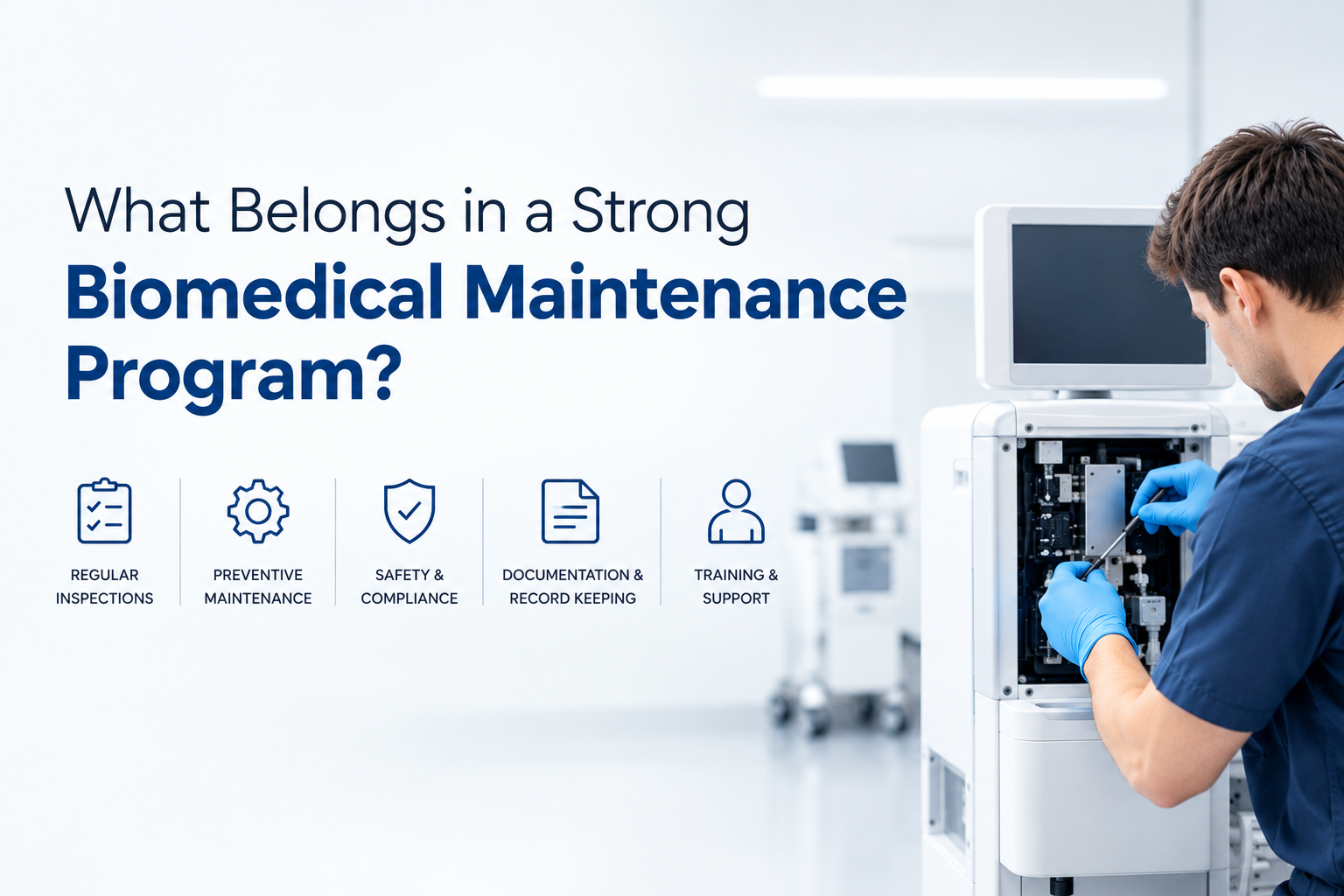
What Belongs in a Strong Biomedical Maintenance Program?

A strong biomedical maintenance program contains six elements: a complete equipment inventory, risk-based preventive maintenance tasks, electrical safety testing, calibration verification, a repair and recall workflow, and audit-ready documentation held in one maintenance management system. Facilities worldwide spent an estimated $45.07 billion on medical equipment maintenance in 2025, according to The Business Research Company.

Most facilities already do some of this work. The gap is usually structure: tasks happen, but the records sit in different places, intervals drift, and nobody can prove what happened when a surveyor asks. The sections below walk through each element and the evidence it should produce.

Midwest Biomedical Technologies builds structured maintenance programs for healthcare facilities across the Midwest; call (708) 406-9887 or email info@mbtbiomed.org to review yours.

Six Core Elements of a Strong Biomedical Maintenance Program

The core elements of a biomedical maintenance program are an equipment inventory, a scheduled set of preventive maintenance tasks, electrical safety testing, calibration verification, a repair and recall workflow, and centralized documentation. Remove any one of them and the program stops being provable.

Each element exists to produce evidence. The inventory proves you know what you own. PM records prove devices received service on schedule. Test values prove equipment is safe and accurate. Work orders prove someone corrected failures before a device went back into patient use.

That evidence chain separates a real program from a pile of service calls. The table below maps each element to the record it should generate and to the gap that appears during a state survey, CMS inspection, or Joint Commission review when the element is missing.

Program element The record it produces The gap a surveyor finds without it
Equipment inventory A current asset list with device ID, location, and risk class Devices in active use that appear on no list
Preventive maintenance schedule Completed PM checklists with dates, results, and technician sign-off Overdue or undocumented PM on patient-connected devices
Electrical safety testing Recorded leakage current and ground resistance values A pass sticker with no test values behind it
Calibration verification Measured readings compared against tolerance limits Devices drifting out of spec with no evidence anyone checked
Repair and recall workflow Work orders, corrective actions, and recall responses Failed equipment returned to service with no record
Documentation system One retrievable service history per device Records scattered across binders, inboxes, and vendor portals

If any entry in that middle column does not exist at your facility, that row is where the work starts.

The Case for Biomedical Maintenance Services

Facilities invest in biomedical maintenance services because equipment failures put patients at risk, interrupt care, and generate citations that cost far more than the maintenance would have. ECRI’s Top 10 Health Technology Hazards report for 2026, published in January 2026, flags substandard medical products and missed device recalls among the year’s most serious patient-safety threats, and both get caught at the facility level by the same mechanisms a maintenance program provides: inspection, testing, and organized records.

The operational case is just as direct. A vital signs monitor that drifts out of tolerance produces bad readings long before it produces an error message. Scheduled service catches that problem quietly on a planned visit instead of loudly in the middle of a shift.

The compliance case is the bluntest of the three. Surveyors from CMS, state licensing agencies, and the Joint Commission do not accept a verbal assurance that equipment gets maintained. They ask for the records, and a facility either has them or it does not.

Preventive Maintenance Tasks That Belong on Every Schedule

Every schedule of preventive maintenance tasks should include visual inspection, cleaning of serviceable components, functional testing against intended clinical use, battery checks, replacement of manufacturer-specified wear parts, and verification that alarms and safety features work. Measured values belong on the checklist wherever the device allows them, because a recorded reading carries more weight with a surveyor than a checked box.

Service intervals start with the manufacturer’s recommendation. From there, risk classification, usage intensity, and operating environment adjust the frequency: annual PM is a common baseline for patient-connected devices, while high-risk and life-support equipment takes priority and often needs semiannual or quarterly attention. Where regulations permit an alternative equipment maintenance strategy, the interval change must rest on documented history, not convenience.

Imaging systems deserve their own line in the schedule. A CT scanner or X-ray unit can produce degraded output without any visible malfunction, so its PM depends on system-specific performance parameters rather than a generic checklist. Structured preventive maintenance programs set those frequencies by equipment category during the initial inventory review, then hold them.

Maintenance Management Systems Hold It All Together

Maintenance management systems hold a program together by keeping the inventory, the service schedule, and every completed record in one place that staff and surveyors can search and surveyors can verify. A working system tracks each device’s ID, location, and risk class, its PM due dates, its test results, its repair history, and its recall status.

The format matters less than the discipline. A hospital typically runs CMMS software; a small clinic can run a rigorously kept shared log. Either version succeeds on the same three tests: every device has one retrievable history, overdue PM is visible before a surveyor finds it, and no record lives only in one technician’s inbox.

The system also depends on what enters it. A service visit that ends without written findings never happened as far as an inspection is concerned, which is why documentation and reporting support belong inside the service relationship itself, delivered after every visit rather than reconstructed before every survey.

Repairs, Parts, and Recalls: Closing the Loop

A program should handle repairs through documented work orders, verify performance before any device returns to patient use, and check every manufacturer recall against the equipment inventory. The repair record needs five parts: the reported symptom, the diagnosed cause, the corrective action, the post-repair verification, and the sign-off.

Recall tracking is the piece facilities most often skip, and the scale of recall activity makes that a real exposure: the FDA oversaw recalls of 3,934 medical devices between fiscal years 2020 and 2024, according to a U.S. Government Accountability Office report published in December 2025. Without a current inventory, a facility cannot even confirm whether a recalled model sits in its building.

Parts belong in the plan too. Stocking the wear items that fail most often, or working with a provider who does, shortens downtime on the equipment categories a facility depends on daily. When a fault does surface, organized repair support closes the loop with written findings instead of an invoice and a shrug.

How Midwest Biomedical Technologies Structures a Program

MBT builds a maintenance program by starting with an equipment inventory review, setting service frequencies by category, and delivering written documentation after every visit. The company is an independent biomedical service organization established in 2018, based in Oak Brook, Illinois, and serving nursing homes, clinics, ambulatory surgery centers, imaging centers, hospitals, and assisted living communities across Illinois and the broader Midwest.

Programs can fold electrical safety testing and calibration and performance verification into the same recurring agreement, so one schedule and one documentation trail cover the full scope. Records arrive structured for Joint Commission surveys, CMS inspections, and state licensing reviews, and facilities work directly with the team that performs the service rather than a dispatch queue.

Imaging is the standout capability. MBT’s lead engineer has spent more than 30 years working exclusively on radiology and diagnostic imaging equipment, including CT, X-ray, fluoroscopy, C-arm, and ultrasound systems, which is a depth of specialization few independent providers carry. The company also states its limits plainly: if a device falls outside its scope, the facility hears that before any agreement, not after.

Frequently Asked Questions

The questions facility teams ask most often cover service frequency, the preventive-versus-corrective distinction, requirements for small sites, survey documentation, and outsourcing. The answers below address each one directly.

How often should biomedical equipment be serviced?

Service frequency follows the manufacturer’s recommended interval, adjusted for risk classification, usage intensity, and operating environment. Annual preventive maintenance is a common baseline for patient-connected devices, while high-risk and heavily used equipment often needs semiannual or quarterly visits. An alternative equipment maintenance strategy may change intervals where regulations permit and service history supports it.

What is the difference between preventive and corrective maintenance?

Preventive maintenance is scheduled work a technician performs before failure: inspection, testing, part replacement, and verification on a set interval. Corrective maintenance is an unscheduled repair after a fault appears. A strong program plans the first and documents both, because a repair without a recorded post-repair check leaves an unverified device in patient use.

Do small clinics and nursing homes need a formal maintenance program?

Yes. State licensing reviews and CMS requirements apply to small facilities, not just hospitals, and surveyors expect documented service records for patient-care equipment. A small site’s program can stay simple: a current inventory, a written schedule, and a completed record for every visit. Facility size changes the scale of the program, never the need for one.

What records do surveyors ask for during an inspection?

Surveyors typically ask for the equipment inventory, completed preventive maintenance records with dates and results, electrical safety test values, calibration evidence for applicable devices, and repair histories showing corrective actions. They want measured values and signatures rather than blank checkboxes, and they expect records retrievable during the visit, not reconstructed after it.

Can a facility outsource its entire biomedical maintenance program?

Yes. Facilities without in-house biomedical staff commonly contract the full program to an independent service organization, which manages the inventory, schedule, testing, and documentation under one agreement. Larger facilities often split coverage, keeping routine work in-house while outsourcing specialized categories such as imaging. Either model works when one party clearly owns the records.

Where to Start

Start by listing every device in the building, because the inventory decides everything downstream: what gets scheduled, what gets tested, and what records must exist. Then compare that list against your current service files; every device with no history is a gap, and the gaps are the plan.

You do not have to run that review alone. MBT will walk your inventory with you, recommend service frequencies by category, and structure a program around your equipment and your compliance requirements. Get started or call (708) 406-9887.

What Should Hospitals Know Before Repairing Ultrasound and X-Ray Equipment?

When medical equipment fails in a hospital, patients are at risk. A delay in diagnosis and treatment causes suffering while revenues are lost due to the inability to provide services. What should hospitals know before requesting service for their ultrasound and x-ray equipment?

Before attempting any repairs, the hospital administration should check whether the equipment is under warranty, whether there are certified parts available on the market, and whether the service provider is FDA- and Joint Commission-certified. The administration should also establish if the cause of the malfunction was hardware- or software-related or due to the operator’s error, which might indicate whether a minor adjustment or a major overhaul is necessary.

At Midwest Biomedical Technologies, we often advise clinical engineering teams on precisely these sorts of issues. Whether you run a major regional medical center in Chicago or a small outpatient surgery clinic, understanding the technical and regulatory implications of your diagnostic imaging equipment is vital.

Consider these factors before approving any service calls on your high-value diagnostic imaging equipment.

The Financial and Clinical Impact of Equipment Downtime

Medical imaging equipment is one of the most substantial capital expenditures for any medical facility. The downtime of a CT scanner, MRI machine, or digital radiography room has serious financial repercussions. Reduced patient capacity, delays in diagnostic procedures, and the diversion of ambulatory and emergency traffic to other facilities can cause significant disruption to hospital operations.

For routine diagnostics, long equipment downtime causes rescheduling that frustrates patients and harms a hospital’s reputation. In addition, an x-ray or ultrasound room that’s down for repairs is a huge expense, with thousands of dollars in lost revenue every day. This is why hospitals need proactive Healthcare Technology Management (HTM) and quick, reliable biomedical equipment repair.

Key Considerations Before Servicing Ultrasound Equipment

Ultrasound machines are exceptionally portable and delicate, which makes them subject to a unique set of potential damages. Before agreeing to pay for an ultrasound equipment repair, make sure you review the following list of common failure modes.

1. Transducer and Probe Integrity

The most common source of failure in an ultrasound machine is the transducer probe. They get dropped, run over, dropped again, and subjected to harsh chemical cleaners. First, try a different probe in the same port to rule out the probe itself. Then, test the suspected faulty probe in another machine if possible. Our techs often see hospitals throw away thousands of dollars in equipment because one specific crystal array or pin needed repair.

2. Software and PACS Integration

Sometimes, a machine can be working fine mechanically, but it may not be sending images to the PACS or RIS. Before calling in mechanical service, check the network connections and DICOM setups. Sometimes it may just be a simple software update or an IP conflict that is causing the error.

3. Power Supply and PCB Issues

Ultrasound units require a certain amount of electricity. Deviations from the standard can damage the printed circuit boards or the power supply. If your system is shutting down or freezing randomly, test the facility’s power supply and the unit’s power supply to rule out those problems before you suspect the hard drive or mother board.

What to Know Before Executing X-Ray Equipment Repair

X-ray equipment repair involves high voltages, large moving parts and many safety precautions to avoid radiation exposure. The challenge is greater in terms of regulatory requirements and patient safety.

1. X-Ray Tube Lifespan and Calibration

The x-ray tube is a consumable item. It loses its performance each second because it is used. If you have noticed poor-quality imaging or arcing, it is a sign that the tube is going bad. But before you replace the x-ray tube, which is very expensive, check if the generator and the high-voltage cables are operating properly. A defective cable can mimic the symptoms of a bad x-ray tube.

2. Collimator and Table Alignment

Mechanical breakdown of the bucky, table, or collimator can cause misalignment. When technologists have difficulty placing a patient or the radiation field does not match the light field, the machine requires mechanical calibration. Mechanical calibration should only be performed by qualified personnel to ensure that it meets FDA radiological health regulations.

3. Radiation Safety and Compliance

Any service performed on an x-ray tube, collimator or generator must be calibrated to verify that exposure levels are within the required limits. The Joint Commission then requires documentation of these repairs. Your imaging service provider should be able to provide service reports verifying that the equipment was tested and calibrated to original equipment manufacturer (OEM) specifications before being returned to service.

Repair vs. Replace: A Decision-Making Framework

One of the most challenging decisions that hospital administrators are confronted with is the decision to invest in new equipment. Our experts offer the following guidance on conducting the research for the procurement of a new radiology system.

Decision Factor Lean Toward Repair Lean Toward Replacement
Equipment Age Under 7 years old Over 7–10 years (End of Life)
Cost of Repair Less than 30-40% of replacement cost Greater than 50% of replacement cost
Parts Availability OEM or aftermarket parts readily available End of Support; parts are obsolete or hard to source
Clinical Utility Meets all current diagnostic standards Lacks modern integration (e.g., poor DICOM support, low resolution)
Failure Frequency Isolated, rare failure Chronic breakdowns causing frequent patient delays

If an old digital radiography system that requires a new digital detector panel and a new tube changes at the same time during the year, it is usually more cost-effective to purchase a new system. On the other hand, a five-year-old ultrasound with a broken monitor should virtually always be repaired.

Choosing the Right Service Provider

When a piece of equipment breaks down, companies typically have three options regarding repairs: the OEM (Original Equipment Manufacturer), internal resources such as clinical engineering, and independent service organizations (ISOs).

Although OEMs often have extensive knowledge about their equipment, their service contracts can be expensive, and they sometimes have long response times. Meanwhile, in-house service can provide a first line of defense but may lack the tools or specialized knowledge to perform advanced diagnostic tests or access particular calibration software.

Partnering with an experienced ISO is usually the best option in terms of fast response, broad multi vendor expertise and cost effectiveness. If you are looking for the right partner, make sure to check our guide on how to choose the right medical equipment repair service for your facility.

Common Mistakes Hospitals Make During Equipment Maintenance

Through our practice in servicing medical facilities, we have noted several recurring issues that lead to losses for a hospital.

  1. Ignoring Preventive Maintenance (PM): The biggest waste in terms of both time and money is treating equipment breakdowns as the primary issue. Only servicing machines once they break down leads to a much shorter lifespan for machinery and electronics.
  2. Poor Error Code Documentation: Whenever a machine goes faulty, it usually shows an error code on the screen. However, technicians quite often clean the system, restart, and move on without writing down what the code was. Always document the code to save hours of troubleshooting later.
  3. Using Improper Cleaning Agents: Some machines, such as ultrasound’s screen or transducer cable, require special treatment when cleaning. Using bleach wipes that are not designed for medical equipment will damage the plastics and rubbers, shortening the device’s lifespan.
  4. Neglecting to Backup Presets and Settings: Before allowing a service center to replace a major part like the motherboard, make sure you backup all your custom software settings, network configurations, and presets. Otherwise, your radiology department staff may have to spend hours, days, or even weeks re-establishing the devices’ settings.

Preventive Maintenance Checklist for Imaging Systems

To ensure the equipment’s greatest possible uptime, it is essential to design and stage a particular preventive maintenance workflow. Although the requirements may differ for different manufacturers, the following general instruction is based on the standard established by the Association for the Advancement of Medical Instrumentation (AAMI).

Daily Tasks (Completed by Technologists)

  • Inspect all relevant transducer cables, x-ray table tracks, and power cords for physical damage.
  • Make sure that the connections to PACS and RIS have been established.
  • Wipe all patient-contact surfaces with approved disinfectants.
  • Ensure all physical buttons and touchscreen areas are functioning properly.

Monthly Tasks (Completed by In-House Biomed or Technologists)

  • Inspect and clean the air filters of computer towers and other relevant machines to prevent overheating
  • Conduct phantom tests on ultrasounds and CT/x-ray machines to ensure there are no issues with images being produced
  • Test the monitor stands, brakes and wheel locks for mechanical integrity.

Annual/Semi-Annual Tasks (Completed by Certified Service Providers)

  • Perform a full electrical safety test.
  • Check radiation output and adjust the x-ray generator.
  • Perform an internal software diagnostic and clean hard drive cache.
  • Install any OEM software patches or updates.

To Conclude

The proactive approach to management of the medical imaging equipment is of paramount importance. This includes knowledge about the vulnerabilities of particular machines (such as ultrasound or x-ray equipment), adherence to relevant rules and regulations and taking into due consideration the timing of repairs or replacements of the devices.

Never wait until you’ve had a catastrophe. See that your preventive maintenance schedule is always adhered to and that you have a reputable service partner on call whenever a crisis erupts.

At Midwest Biomedical Technologies, our staff is here to keep your systems running. If you are having ongoing equipment issues or you need to develop a systematic maintenance program for your facility, please contact our team.

Frequently Asked Questions (FAQs)

How long does it typically take to repair an ultrasound machine?

Most ultrasound equipment repair can be done within 24-48 hours depending on the availability of a particular probe or circuit board. Software issues or calibration of the machine can be fixed within a few hours.

Are aftermarket parts safe for medical imaging equipment?

Yes, if they are certified and tested to be equal to or better than OEM standards. Reputable service providers will use high-quality aftermarket or refurbished parts to save you money while still meeting FDA and Joint Commission regulations.

What is the average lifespan of an x-ray tube?

An x-ray tube generally lasts from four to seven years depending on the number of patients and the types of tests. Warm-up practices and regular maintenance usually prolong tubes’ lives.

How often should medical imaging equipment undergo preventive maintenance?

Most manufacturers and even regulatory agencies such as the Joint Commission recommend comprehensive preventive maintenance at least once or twice a year. However, high-use facilities may need to perform them more frequently, such as quarterly, to ensure that equipment is available when needed.

Why is my ultrasound machine not connecting to PACS?

Network connection problems are commonly caused by IP address conflicts, firewall updates on the hospital’s main server, or a corrupted DICOM configuration on your machine. Therefore, check your cables and contact your IT department before calling for a hardware technician.

Can in-house biomedical teams repair digital radiography systems?

In-house personnel can perform minor diagnostic tests and repairs such as physical inspections and replacing parts. More involved procedures such as servicing high-voltage generators or performing radiation calibrations necessitate the use of specialized equipment and should be left to qualified imaging personnel.

How Often Should Medical Equipment Really Be Calibrated?

Walk into any healthcare facility and ask when they last serviced their medical devices; you are likely to hear the answer, “We do that every year.” In any healthcare facility, performing a service on equipment every twelve months is normal. As such, the idea of having an annual service schedule is so deeply rooted in the minds of facility managers that they believe it to be a legal requirement.

But is it?

The short answer is no. There is no one-size-fits-all medical device calibration schedule. An annual service may be a good default, but a rigid policy of servicing everything every year can lead to over-calibrating simpler, lower-risk devices while potentially overlooking more complex, higher-risk equipment.

At Midwest Biomedical Technologies, our experienced team has been assisting medical institutions with establishing compliant equipment management programs within the Midwest region since 2018. In this guide, we have discussed the factors that dictate medical equipment calibration frequency, established the criteria for assessing inventory, and outlined the relevant regulatory compliance standards.

How Often Should Medical Equipment Be Calibrated?

Medical equipment must be calibrated in accordance with the manufacturer’s recommendations and the clinical risk associated with the device. Even though most manufacturers suggest a yearly calibration, the calibration intervals should be determined based on the equipment’s usage and the environment in which it is kept.

Instead of relying on a generic timeline, healthcare facilities should determine their calibration interval by evaluating:

  • Original Equipment Manufacturer (OEM) recommendations
  • Applicable federal, state, and accreditation requirements
  • The device’s intended clinical use and patient risk
  • Measurement accuracy requirements and historical drift
  • Frequency of use and environmental wear

What Determines the Right Calibration Interval?

Establishing the calibration interval requires a risk-based approach. According to the National Institute of Standards and Technology (NIST), there is no standard calibration interval because numerous factors should be considered before establishing the calibration interval of an instrument.

Manufacturer Recommendations

The primary consideration for any service schedule can be found in the manufacturer’s service manual. For many categories of equipment, particularly imaging and radiologic devices, federal regulations and accreditation agencies require adherence to the OEM maintenance schedule.

Equipment Risk and Clinical Impact

A device that is used in a critically important procedure or one in which a dosage must be precise to exact measurements poses a greater risk if its reading is inaccurate. High-risk equipment needs to be calibrated more often or more strictly than lower-risk or general equipment.

Usage Frequency and Environment

A patient monitor that is located in a busy emergency room will see more wear and tear as well as use its sensors more frequently than the same device in a less active outpatient setting. The differences in physical, thermal, and mechanical forces can make a significant difference on the lifespan of a piece of equipment

Equipment Age and Historical Drift

As equipment ages, it tends to deviate from the precision of its original state at a quicker pace. By analyzing the equipment history and calibration records, you can determine if a particular piece of aging equipment requires a shortened maintenance schedule to stay within tolerance.

Regulatory and Accreditation Requirements

Joint Commission Organizations as well as CMS permit facilities to make alterations to the maintenance schedules of particular devices through the use of alternate equipment management or AEM. This applies to a variety of devices, but with specific exceptions and with specific requirements to understand what devices require the OEM timeline.

Should All Medical Equipment Be Calibrated on the Same Schedule?

No. Assigning the same service schedule to all of an organization’s devices is not a cost-effective or clinically responsible approach to equipment management. A proper inventory management program will classify devices according to their individual needs and assign service schedules accordingly.

Equipment Situation Factors Affecting Frequency What the Facility Should Consider
Frequently used equipment High physical wear, sensor degradation, rapid historical drift. Review performance history and usage rates. Consider shortening the interval if out-of-tolerance results occur frequently.
High-risk equipment Severe clinical consequences of inaccurate readings or failure. Strictly follow applicable requirements and manufacturer guidance. Do not extend intervals without robust, documented justification.
Imaging equipment Strict manufacturer specifications, radiation safety, complex internal components. Use documented service and verification procedures. CMS guidelines generally prohibit AEM programs for imaging equipment.
Newly acquired equipment Limited historical data regarding stability in your specific facility. Start strictly with manufacturer guidance. Build an equipment history before considering any schedule adjustments.
Equipment after repair Corrective work, replaced components, or physical trauma may affect measurement baseline. Perform appropriate post-repair testing and calibration verification before returning the unit to clinical use.
Equipment with repeated failures Evidence of mechanical instability or rapid electronic drift. Evaluate if the equipment has reached its end of life or if the calibration interval needs to be significantly shortened.

What Is the Difference Between Calibration, Preventive Maintenance, and Performance Verification?

These terms are often used interchangeably in the context of busy hospitals and clinics, but they have significantly different implications for the biomedical field. Being able to distinguish the two is essential to correctly servicing and recording service completion for compliance purposes.

  • Calibration: It can be described as the process of comparing a device’s measurement to a traceable reference standard (i.e., NIST-traceable standards) and adjusting the device so that its measurements are accurate in relation to the standard.
  • Performance Verification: It is the process of testing the equipment against set standards to confirm that it is performing within the set parameters without making adjustments to it.
  • Preventive Maintenance (PM): A scheduled inspection, cleaning, lubrication, or servicing of equipment or a replacement of batteries or parts in anticipation of future failure and to ensure continued reliability.
  • Repair: Actions taken to restore an item that is inoperative, malfunctioning, or nonconforming to technical specifications.

Typically, our biomedical calibration services comprise all three of these steps: we do preventive maintenance, check if everything is working fine, and then calibrate the sensors to guarantee total accuracy.

When Should Medical Equipment Be Checked Before Its Scheduled Calibration?

Even if your equipment has a 12-month service schedule, there are some events that require immediate intervention. Do not wait for the next preventive maintenance if the device went through:

  • Physical damage: The device was dropped, hit, or exposed to liquid spills.
  • Major repairs: Replacing any of the device’s major internal components (such as sensors, power supplies, or motherboards).
  • Unusual readings: Practitioners claim that the results are abnormal for the patient’s condition.
  • Relocation: Very sensitive equipment was transported to another facility or subjected to extreme temperatures during transit.
  • Repeated alarms: The machine tends to give technical errors or warnings.

How Often Should Imaging Equipment Be Calibrated?

Imaging equipment is one of the most hazardous and highly regulated forms of medical devices. Diagnostic X-ray, computed tomography, fluoroscopy, and ultrasound procedures require proper installation and commissioning to achieve dose accuracy and image quality.

Unlike some general biomedical devices, the maintenance schedule for most imaging equipment cannot be determined by a facility’s preferences. Facilities usually follow the recommendations of the original equipment manufacturer (OEM), state regulations regarding radiation safety, and federal regulations.

At Midwest Biomedical Technologies, imaging is our specialty. Our staff engineer has more than 30 years of experience in radiology and diagnostic imaging. From our office in Oak Brook, Illinois, we provide service imaging equipment support in the region, making sure that your equipment receives the service and testing needed to meet manufacturer guidelines.

What About C-Arm Equipment?

Mobile c-arms are used extensively in the operating room, outpatient surgical centers, and the pain management environment. They undergo frequent movement, being wheeled through doorways and exposed to temperature variations in the OR environment. All this requires careful oversight.

C-arm maintenance comprises more than simply a basic electrical safety inspection. It usually includes a performance evaluation of the image intensifier or flat panel detector, dose checks, mechanical examination, and comprehensive preventive maintenance of the device’s cooling and power supply.

If a system sustains damage, it may require professional C-arm repair. However, testing after repair is a critical step because even a minor maintenance activity can compromise the system’s geometry or output. Thus, facilities should always make sure that systems undergo a comprehensive performance evaluation before being returned to the operating room.

How Should Healthcare Facilities Track Calibration?

If it’s not documented, it didn’t happen. Documentation allows the facility to stay on top of what is going on with their equipment and get ready for state surveys, joint commissions, and internal audits.

A compliant calibration record should capture:

  • Equipment identification (Name, OEM, Model, exact Serial Number)
  • The particular workshop or department where it was serviced
  • The date when it was serviced
  • The one who performed the service (name and signature of technician/service provider)
  • The test equipment used (including its calibration traceability)
  • Particular test results (“as found” and “as left”), pass/fail
  • Out-of-tolerance findings with corrective action taken
  • The next due date for servicing.

Keeping up with this documentation is a huge task for a busy medical office or rehabilitation facility. That is why many Midwest facilities turn to us for documentation and compliance support to help maintain their equipment histories in an organized and auditable manner.

What Happens If Equipment Fails Calibration?

When a medical device is calibrated or tested and found to be outside of acceptable tolerances, the facility needs to respond accordingly. The general process would be as follows:

  1. Remove from service: Take the equipment off the clinical floor and put it out of service tag to ensure that it is not used until repairs have been made.
  2. Documenting the failure: It is important to document the “as found” readings that will give you information on what caused the incident.
  3. Assessment of impact on patient care: If the device was out of calibration, clinical leadership might have to take actions to determine if patient care had been compromised.
  4. Perform corrective action: The biomedical technician attempts to adjust the device back into specification. If the first action proves ineffective, medical equipment repair and/or replacement of components are required.
  5. Verify performance: The repaired unit must be calibrated to verify that it is working correctly.
  6. Document the return: The final “as left” status is recorded, and the equipment is returned to service.

How Can a Facility Build a Practical Calibration Program?

Building an effective equipment management program means changing the paradigm from a reactive paradigm to a proactive paradigm. 

Therefore, the first step is to create a complete digital inventory of the existing equipment: The proverbial knowing what you own. Then, a schedule should be created for every piece of equipment according to the manufacturer’s recommendations or legal requirements.

For many medical offices, skilled nursing facilities, and outpatient clinics, managing this kind of schedule internally can be overwhelming; but partnering with an independent service organization to administer a comprehensive preventative maintenance program is simple!

If you are now considering who to turn to for medical equipment repair, do not forget to read our guide on selecting the best option for your business. This way, you will be able to entrust your diagnostic tools to professionals who will correctly track and treat them, returning them to your staff in good working condition.

Need to Schedule Your Next Service?

Do not worry about keeping up with equipment maintenance requirements for your staff. Regardless of a full facility survey, specific imaging equipment service and repair, or even a regular maintenance program, we are here to help you. Reach out to set up an appointment time to review your inventory and make sure you are always survey-ready.

Frequently Asked Questions

How often should medical equipment be calibrated?

Medical equipment should be calibrated according to the manufacturer’s recommendations, amount of use, and the clinical risk it presents. Typically, equipment is calibrated once a year, but some equipment carries a higher or lower risk or is used more or less frequently, and so is calibrated more often or less often accordingly.

Is annual calibration required for all medical equipment?

No, not all equipment is calibrated annually. That’s a federal standard baseline, but every piece of equipment has a calibration schedule defined by the OEM (Original Equipment Manufacturer), federal regulations, or equipment history. Some are done semi-annually, while others are less frequent.

What determines a medical equipment calibration interval?

The calibration schedule is based on the information retrieved from the manufacturer’s service manual, clinical risk, frequency of use, potential hazards, the instrument’s maintenance history, and relevant regulatory or accreditation requirements (CMS/JCAHO).

Does medical equipment need calibration after repair?

Yes, any device that has been repaired by major corrective maintenance or has undergone component replacement or has suffered trauma shall be verified for performance and accuracy through testing and calibration. This is to ensure that repair did not affect the measurement baseline of the device before returning it to service.

Does Midwest Biomedical Technologies provide calibration services in Illinois and other Midwest states?

Yes. Based in Oak Brook, Illinois, Midwest Biomedical Technologies offers biomedical calibration, preventive maintenance, and repair services to medical institutions in the Midwest of the U.S., including Illinois, Indiana, Wisconsin, Michigan, Iowa, and the surrounding states.