

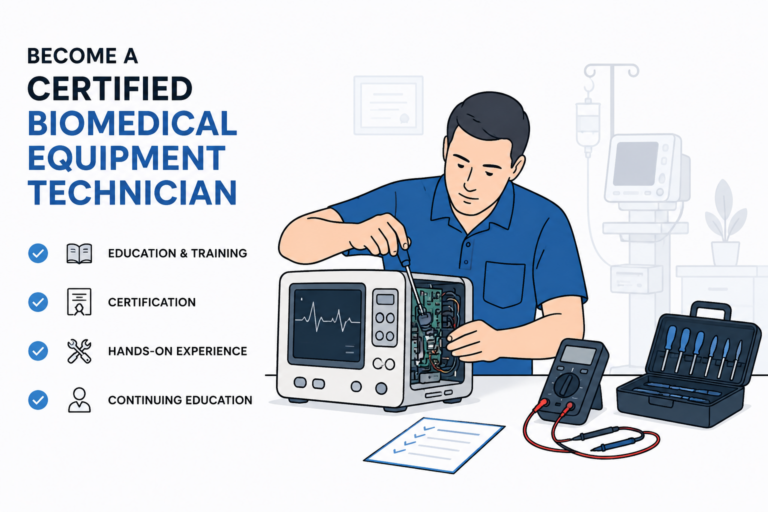
Repair medical equipment when the repair costs less than half of a replacement, the device has used less than half of its expected service life, and parts and service software remain available. Medical capital equipment prices are projected to rise 3.43% in 2027 (Vizient, July 2026), so a documented repair protects both your budget and your uptime.
Those three tests settle most cases, but the hard calls sit in the gaps: a repeat failure on a mid-life monitor, a CT tube on a system the manufacturer no longer supports, or an ultrasound that works but cannot connect to your PACS. This guide shows you how to read each situation and record the decision.
Need a second opinion on a failing device? Contact Midwest Biomedical Technologies at (708) 406-9887 or request service online.
How Do You Know a Repair Is Worth It?
A repair is worth it when the quoted cost, the remaining service life, and the manufacturer’s support status all point the same direction. Run each test in order and stop at the first failure.
- Cost share: Divide the repair quote by the current replacement price. Under 50%, repair. Over 50% on a device that has also passed the midpoint of its service life, replace.
- Remaining life: Compare the device’s age against the manufacturer’s stated expected service life. A device in its first half earns repairs. A device in its final quarter earns a replacement plan, even if today’s repair is cheap.
- Support status: Confirm the manufacturer still sells parts and still issues service software and access keys. A March 2026 U.S. PIRG Education Fund survey found that 83% of biomedical technicians see equipment downtime increase from repair barriers at least somewhat frequently, and 79% are regularly denied service information for critical equipment. When support is gone, every repair becomes a gamble on part availability.
Two tiebreakers remain. A device with a clean service record and one isolated fault leans repair. A device with three work orders in a year leans replacement, whatever the math says.
Reading the Failure: What Broke Tells You What to Do
The type of failure predicts the outcome of a repair more reliably than the age of the device. Use this table to match the fault to the right decision and the right record.
| What Failed | What It Usually Means | Repair or Replace | What to Record |
| Consumable or wear part (battery, cable, probe, seal, caster) | Normal wear on a healthy unit | Repair | Part replaced, date, next PM interval |
| One mechanical or electrical subsystem (motor, pump, power supply) | Isolated fault, not systemic decline | Repair, then verify performance | Findings, corrective action, verification results |
| Same subsystem fails twice within 12 months | Root cause unresolved or systemic wear | Replace in the next capital cycle; repair only to bridge | Failure count, dates, cost per event |
| Main board, detector, tube, or software fault on a device past manufacturer support | Part scarcity and software lockouts drive cost and downtime | Replace, unless a verified part is on hand and cost stays under 50% | Support status, part source, lead time |
| Safety-related failure (leakage current out of limits, failed alarm, open recall) | Clinical risk regardless of cost | Remove from service; repair only with full safety retest | Test results, recall reference, decision record |
| Device works but no longer meets clinical or connectivity needs | Obsolescence, not a fault | Replace on a planned schedule | Requirement gap, target date |
The record column matters as much as the decision column. CMS Conditions of Participation and The Joint Commission’s Environment of Care standards both require evidence that equipment problems were identified, addressed, and tracked. A repair with no written findings looks the same as no repair during a survey.
What Does Replacing Medical Equipment Cost beyond the Purchase Price?
Replacement costs more than the invoice because it triggers installation, acceptance testing, staff retraining, and a full documentation reset. Each of those steps carries labor, downtime, and risk that a repair on a supported device avoids.
- Incoming inspection: Every new device needs electrical safety testing and performance verification before first patient use, plus a new asset record and PM schedule.
- Room and infrastructure work: Imaging replacements often require shielding review, power, cooling, and network changes. A tube or detector repair on a well-maintained system skips all of that.
- Retraining: New interfaces change clinical workflows, and staff time spent learning them rarely appears in the capital request.
- Supply exposure: The American Hospital Association reported in July 2026 that the U.S. imported more than $75 billion in medical devices and supplies in 2024, which leaves replacement pricing and lead times open to tariff and shipping swings. A repair uses a single part; a replacement uses an entire imported system.
Add those costs before you compare quotes; the 50% line often moves toward repair.
When Does Repair Become the Wrong Call?
Repair becomes the wrong call when it cannot return the device to the manufacturer’s original safety and performance specifications, or when it only delays a replacement you already know is coming.
The FDA’s May 2024 remanufacturing guidance draws the line clearly. Servicing returns a device to the specifications the manufacturer established. Any work that significantly changes performance, safety specifications, or intended use is remanufacturing, which carries manufacturer-level regulatory obligations. If a proposed fix would cross that line, treat it as a replacement decision, not a repair decision.
Four other situations end the repair conversation:
- The device is under an open recall or safety notice that the manufacturer will not resolve.
- Electrical safety or performance results fall outside limits after a completed repair.
- The manufacturer has ended support and no verified part source exists.
- The device blocks a clinical requirement, such as EHR integration or a required imaging capability.
Ask a qualified biomedical technician or clinical engineer to confirm these findings before you remove a device from service; their written assessment justifies both the capital request and the survey file.
How Preventive Maintenance Records Drive the Decision
A medical equipment preventive maintenance program gives you the data that turns a repair-or-replace guess into a defensible decision. Every scheduled visit adds a dated performance reading, a safety test result, and a note on wear, so trends show up months before a failure does.
That trend line is the core of medical equipment lifecycle management. When you can see that a defibrillator’s battery capacity has dropped at each of the last three inspections, you schedule a battery replacement on your terms. When you can see that an infusion pump has needed corrective service at every other visit, you move it into the replacement plan before it fails during a shift.
Facilities without those records make the call under pressure, with a quote in one hand and a clinical schedule in the other. Read how a structured maintenance program supports lifecycle planning [REVIEW: insert pillar URL] and see our preventive maintenance programs for how the schedule is built around your inventory.
How Midwest Biomedical Technologies Helps You Decide
At Midwest Biomedical Technologies, we give your facility a written assessment of the failed device, the repair cost, the remaining service life, and the support status, so you can decide with the same facts we have. We have served healthcare facilities across the Midwest since 2018 as an independent medical equipment repair company, not tied to manufacturer scheduling queues or pricing structures.
Our repair and troubleshooting support starts with a scope review before any visit. If a repair falls outside what we can appropriately service, we say so before the visit, not after. Every completed repair ends with performance verification and written documentation of findings, corrective actions, and recommended follow-up.
For imaging equipment, our lead engineer brings more than 30 years of specialized radiology and diagnostic imaging experience across CT, X-ray, fluoroscopy, C-arm, and ultrasound systems. That depth matters most on the expensive calls: a tube, detector, or generator fault on an imaging system where the wrong decision costs six figures in either direction.
MBT supports skilled nursing facilities, clinics, imaging centers, surgery centers, hospitals, and assisted living communities across Illinois and the Midwest.
Frequently Asked Questions about Repairing Medical Equipment
Is It Cheaper to Repair or Replace Medical Equipment?
Repair is cheaper for any supported device when the quote stays under half the replacement price, because you avoid installation, acceptance testing, retraining, and a new asset record. Replacement becomes cheaper only when repeat failures, unavailable parts, or safety findings push the total cost of keeping the device above the cost of a planned purchase.
How Long Should Medical Equipment Last before Replacement?
Medical equipment should stay in service for the manufacturer’s stated expected service life, adjusted by its own maintenance record. A device with consistent preventive maintenance and passing safety tests can run to the end of that window. A device with rising corrective service frequency should enter the replacement plan earlier, regardless of its age.
Can an Independent Company Repair Medical Equipment Safely?
Yes. Under FDA guidance, servicing that returns a device to the manufacturer’s original safety and performance specifications is a distinct activity from remanufacturing. An independent provider that verifies performance after every repair, uses verified parts, and documents findings meets the same expectation surveyors apply to any service record: proof that the device was tested and returned to specification.
What Happens When the Manufacturer Stops Supporting a Device?
End of manufacturer support means parts, service software, and access keys become scarce, so each repair depends on a verified part source and a longer lead time. Keep the device in service while it passes safety and performance tests, but move it into the capital plan and stop approving repairs that exceed half of the replacement price.
Does a Repair Affect Accreditation or Survey Readiness?
A documented repair supports survey readiness; an undocumented one hurts it. Surveyors expect a written record showing what failed, what corrective action was taken, and that performance and electrical safety were verified before the device returned to use. Keep that record in the device’s service history alongside its preventive maintenance results.
How Should You Make the Repair-or-Replace Call at Your Facility?
Make the call by running the three tests in order (cost share, remaining life, support status), matching the failure type to the table above, and recording the result in the device’s service history. That process produces a decision you can defend to finance, to clinical staff, and to a surveyor.
If you want an independent assessment before you approve a repair quote or a capital request, Midwest Biomedical Technologies will review the device, document the findings, and tell you plainly which option fits. Call (708) 406-9887, email info@mbtbiomed.org, or request service online.